She Invented the Bag That Built the Modern Grocery Store — Then Had to Fight a Man Who Said She Couldn't Have
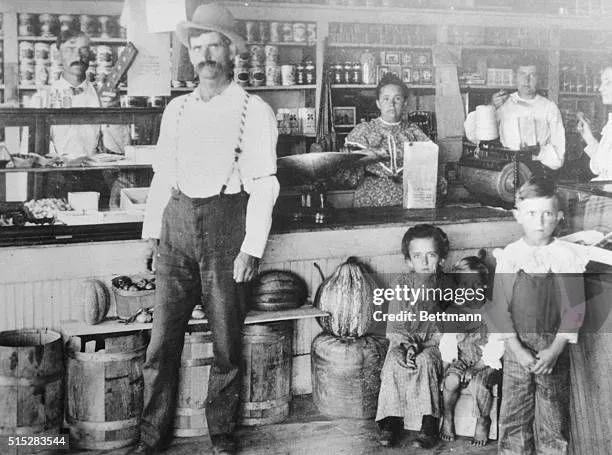
Photo: vintage paper grocery bag general store 1800s, via i.pinimg.com
The Bag You Never Think About
Every week, millions of Americans grab a paper bag at the grocery checkout without a second glance. It's one of those objects so ordinary it's practically invisible — utilitarian, disposable, completely unremarkable. But that flat-bottomed, square-based paper bag sitting on your counter after a grocery run exists because of one of the most audacious acts of intellectual theft in American industrial history, and because the woman it was stolen from refused to let it stand.
Her name was Margaret Knight, and she arguably made the modern grocery store possible.
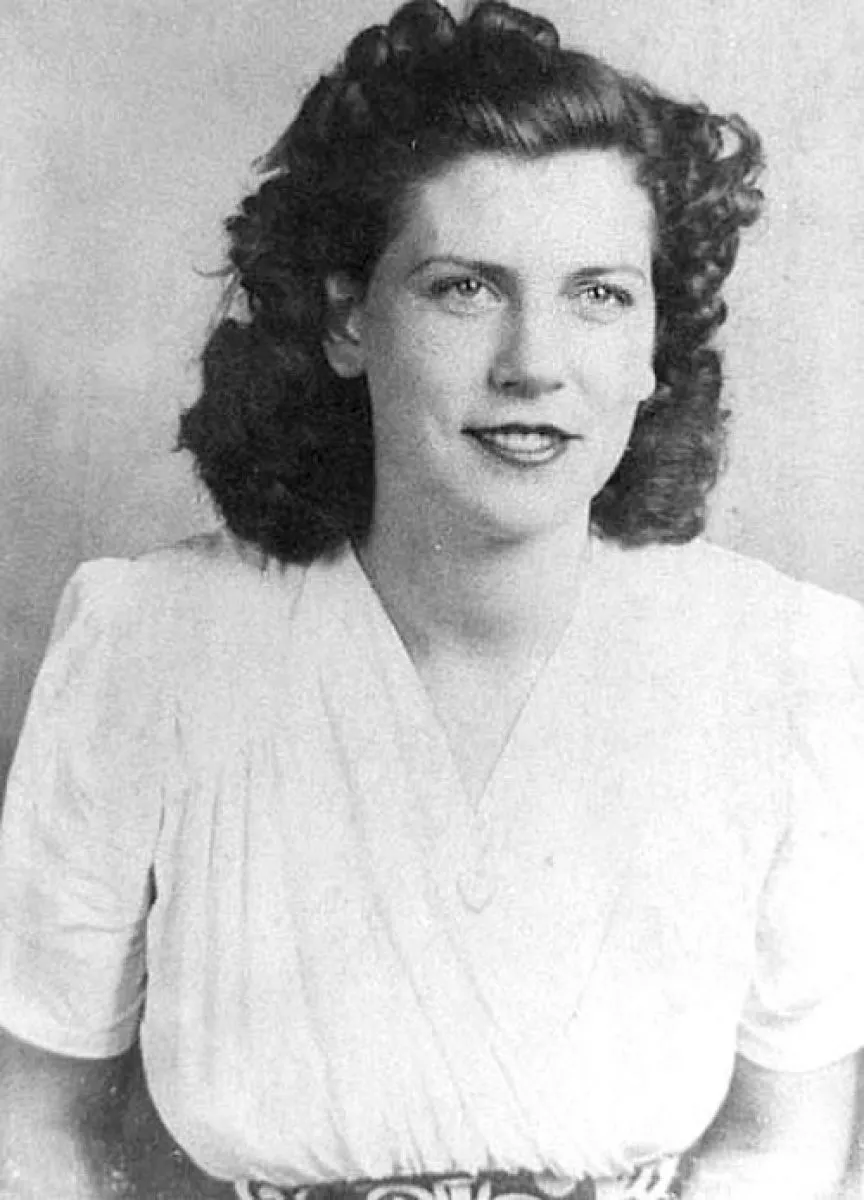 Photo: Margaret Knight, via www.rejectedprincesses.com
Before the Flat Bottom, There Was the Envelope
To understand what Knight actually invented, you have to picture what paper bags looked like before her. In the mid-nineteenth century, paper bags were essentially envelopes — narrow, pointed at the bottom, and completely useless for holding anything heavier than a handful of tea leaves. Merchants used them for small dry goods, but they couldn't stand upright, couldn't hold volume, and collapsed the moment you put anything substantial inside.
The grocery shopping experience of the 1860s reflected that limitation. Customers brought their own baskets and containers. Shopkeepers measured and scooped goods from barrels and bins, then wrapped purchases in paper or dumped them into whatever the customer had brought. The idea of a customer moving freely through a store, selecting items from shelves and carrying them home in a standard container, was essentially impossible. There was no container that could handle it.
That problem is what Margaret Knight set out to solve.
A Self-Taught Inventor in a Paper Mill
Knight was already an unusual figure by the time she turned her attention to paper bags. Born in 1838 in York, Maine, she had been inventing things since childhood — at twelve, she designed a safety device for textile looms that was adopted by mills across New England, though she received no credit or compensation for it at the time. She was, by any measure, a natural engineer working entirely without formal training.
In the late 1860s, Knight was working at the Columbia Paper Bag Company in Springfield, Massachusetts, where she observed the inefficiency of the envelope-style bags being produced. She became convinced that a machine could be built to automatically fold and glue flat-bottomed bags — bags that could stand on their own and hold real quantities of goods.
She spent years developing the design, first in wood and then in iron. The wooden prototype worked well enough to prove the concept. The iron version was built to demonstrate that the machine could be manufactured at scale.
Then someone stole it.
The Patent Thief Who Underestimated Her
While Knight's iron prototype was being constructed at a machine shop in Boston, a man named Charles Annan observed the work being done. He studied the machine's design carefully enough to understand how it functioned — and then filed a patent for it himself before Knight could file her own.
When Knight discovered what had happened and challenged the patent, Annan's defense was breathtaking in its audacity. He argued that a machine of this mechanical complexity could not possibly have been conceived by a woman. The design was too sophisticated, the engineering too advanced. Whatever Knight's role had been, she couldn't have been the true inventor.
Knight went to court with her wooden prototype, her notebooks, her sketches, and witnesses who had watched her build the thing from the ground up. She won. In 1871, she received the patent for the flat-bottomed paper bag machine — one of the first patents ever granted to an American woman for a mechanical invention.
She went on to receive more than two dozen patents during her lifetime, covering everything from rotary engines to shoe-cutting machinery. She died in 1914, widely celebrated in engineering circles but largely unknown to the general public.
The Bag That Rebuilt American Shopping
What Knight's invention actually enabled is easy to underestimate. The flat-bottomed paper bag didn't just make grocery shopping more convenient — it made the self-service grocery store model structurally possible for the first time.
Without a reliable, standardized container that customers could fill and carry themselves, the entire logic of the modern supermarket falls apart. You can't have customers browsing aisles and selecting their own items if there's no practical way to carry those items to the register. The paper bag solved that problem so completely that within a generation, the old-style counter service model — where a clerk assembled your order for you — began to disappear.
The first true self-service grocery store, Piggly Wiggly, opened in Memphis in 1916 and is often credited with inventing the supermarket format. But Piggly Wiggly's entire operating model depended on customers being able to move through the store independently and carry their selections to checkout. That dependency ran straight back to Knight's machine.
 Photo: Piggly Wiggly, via www.chowhound.com
A Billion Small Decisions
Americans use an estimated 10 billion paper bags every year. The design of those bags — the flat base, the square shape, the ability to stand upright and hold real weight — has changed remarkably little since Knight's original patent.
There's something quietly satisfying about that. A woman who was told in open court that she couldn't have invented something went ahead and proved she had, and the object she created became so fundamental to American daily life that it's now essentially invisible. The grocery bag sits on your counter after every shopping trip, holding your dinner ingredients, asking nothing in return.
Margaret Knight would probably appreciate the irony of that invisibility. She spent her whole life building things that worked so well, nobody thought to ask who made them.