Nobody Wanted It — Until Everyone Did: The Unlikely Rise of Brisket
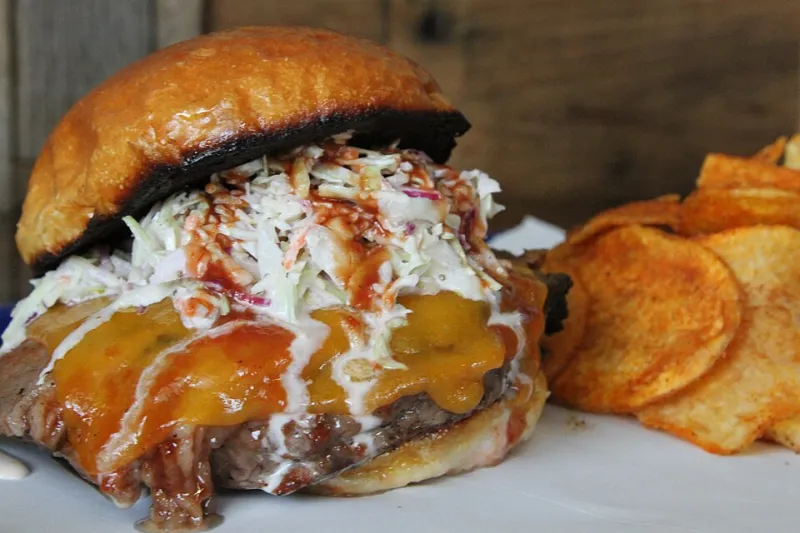
Photo: Hungry Dudes, CC BY 2.0, via Wikimedia Commons
If you want to understand how American food culture actually works — how something goes from worthless to worshipped — brisket is your case study.
Today, a well-smoked brisket is the centerpiece of some of the most celebrated barbecue restaurants in the country. Pitmasters train for years to master it. Food writers fly to Texas specifically to eat it. Weekend backyard cooks spend hundreds of dollars on smokers and obsess over internal temperatures and wood selection and resting times, all in pursuit of a single perfect slice.
One hundred years ago, that same cut was practically given away. Nobody wanted it. And the people who ended up with it had no choice in the matter.
The Cut That Fell Through the Floor
Brisket comes from the breast section of the steer — the lower chest, just above the front legs. It's a working muscle, which means it spent the animal's entire life supporting a significant portion of its body weight. That makes it dense, tough, and threaded with thick connective tissue and fat deposits that don't respond well to quick cooking.
In the early twentieth century, American butchers operated in a hierarchy of cuts. Tenderloin, ribeye, and sirloin were premium products sold to restaurants and households that could afford them. Chuck and round had broad working-class appeal. Brisket sat near the bottom of that hierarchy, regarded as more trouble than it was worth by most butchers and their customers.
The meatpacking industry that exploded in cities like Chicago, Kansas City, and Fort Worth in the late 1800s and early 1900s was ruthlessly efficient about maximizing profit from every part of an animal — but brisket was a problem. It was cheap to produce but hard to sell. It required either long braising times or specialized smoking knowledge that most American home cooks of that era didn't have.
So it got priced accordingly. And the people who bought it were, almost universally, people who couldn't afford not to.
Two Traditions, One Tough Cut
Two communities in particular built their culinary identities around brisket during this period, and they approached it from completely different directions.
The first was the wave of Eastern European Jewish immigrants who arrived in American cities between roughly 1880 and 1920. Jewish dietary law — kosher rules — prohibits certain cuts of meat, and the hindquarters of the animal are entirely off-limits. That eliminates tenderloin, sirloin, and most of the premium cuts that non-Jewish Americans were eating. Brisket, from the front of the animal, was permissible. It was also cheap, which mattered enormously for immigrant families scraping together a life in the tenements of New York, Chicago, and Philadelphia.
Jewish home cooks developed a braising tradition that transformed brisket entirely. Slow-cooked in a pot with onions, carrots, tomatoes, and broth for three or four hours, the tough connective tissue broke down into gelatin, the fat rendered into the surrounding liquid, and the whole thing became something tender, deeply savory, and extraordinary. Brisket became the centerpiece of Jewish holiday cooking — the Rosh Hashanah roast, the Passover main course — a dish that tasted like abundance even when the ingredients had been purchased on a tight budget.
The second tradition developed in Texas, and it arrived by a different route. German and Czech immigrants who settled in central Texas in the mid-1800s brought their butchering and smoking traditions with them. These communities established meat markets in towns like Lockhart, Luling, and Taylor, and they smoked brisket not because they'd perfected it, but because smoking was a preservation method for cuts that weren't selling fast enough to move fresh.
Texas brisket started as a practical solution to a commercial problem. The smoked result was sold cheaply, often wrapped in butcher paper and eaten standing at the counter. Nobody was calling it art. They were calling it lunch.
When Smoke Became a Religion
The transformation of Texas barbecue brisket from humble lunch counter staple to cultural obsession happened slowly, then all at once.
Through the mid-twentieth century, Central Texas barbecue joints continued operating more or less as they always had — local institutions, beloved but not famous, feeding ranchers and workers and families who lived nearby. The techniques were passed down informally, from pitmaster to pitmaster, refined through repetition rather than documented in any systematic way.
What changed was partly demographic and partly media-driven. As Texas cities grew and diversified in the 1970s and 80s, barbecue joints that had once served local communities began attracting broader audiences. Food writers discovered them. Texas Monthly began publishing its famous barbecue rankings. The idea of the Texas barbecue road trip entered the American food imagination.
By the 2000s, a new generation of pitmasters — many of them formally trained, some of them with backgrounds in fine dining — had begun treating brisket with the same obsessive technical attention that French chefs gave to their sauces. Aaron Franklin, who opened Franklin Barbecue in Austin in 2009, became perhaps the most prominent example: a pitmaster who turned brisket into a subject of genuine culinary scholarship, earning a James Beard Award and a line outside his restaurant that has stretched around the block every morning since.
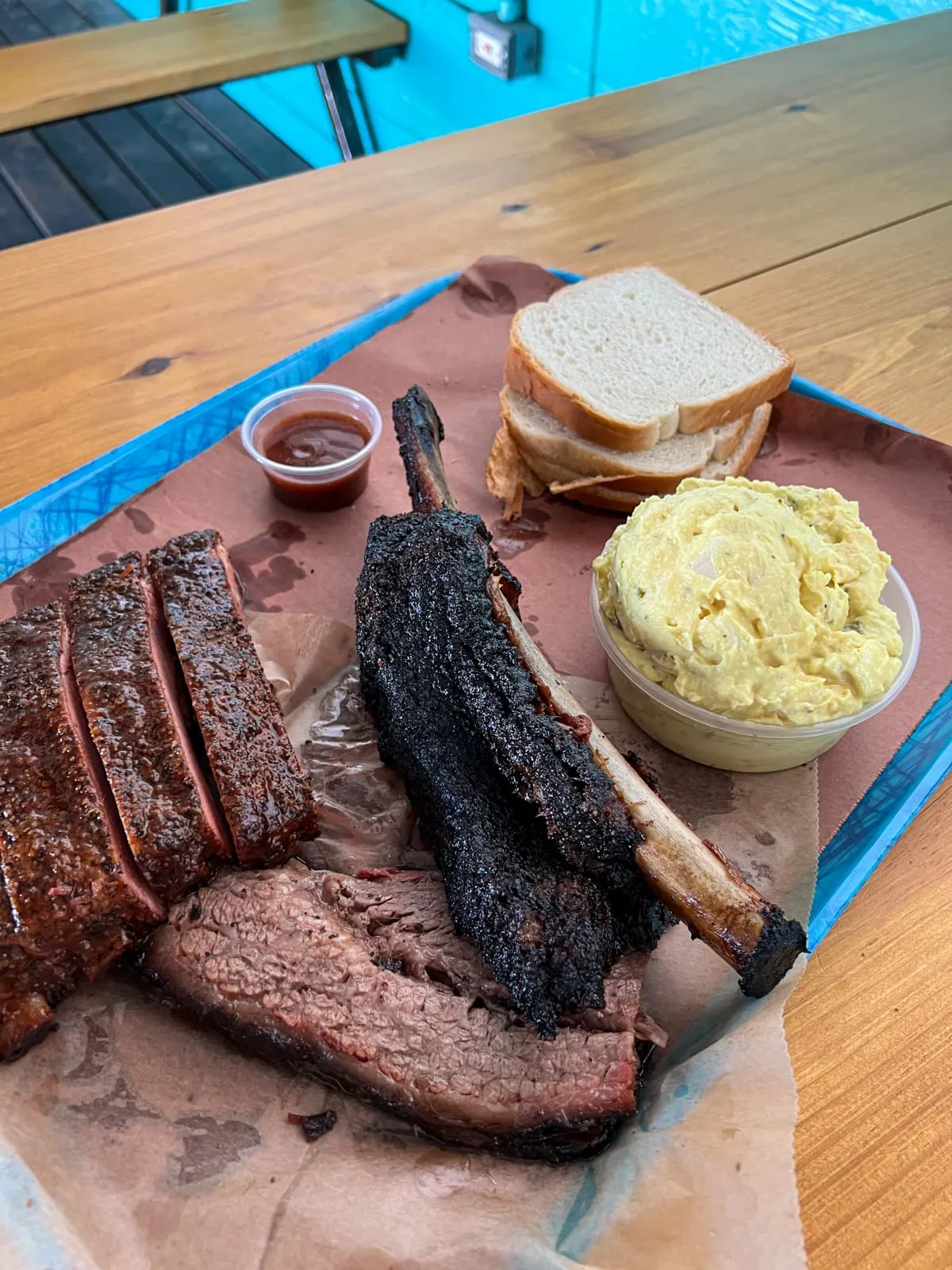 Photo: Franklin Barbecue, via feastio.com
The Jewish deli tradition underwent its own revival in roughly the same period. As classic delis in New York and Chicago began closing, a new generation of Jewish-American chefs started reclaiming the braised brisket as a serious dish worth celebrating. It appeared on restaurant menus not as a humble weeknight meal but as a centerpiece, often with heirloom vegetables and carefully sourced beef.
What Brisket Actually Teaches
The brisket story is, at its core, a story about what happens when necessity meets patience. The immigrant communities who built their cooking traditions around this cut didn't choose it because they saw its potential. They chose it because it was what they could afford. The technique — whether braising or smoking — came out of a need to make something difficult become something edible, and eventually, over generations, something exceptional.
That transformation pattern shows up again and again in American food history. The dishes that define regional cuisines and generate the most passionate devotion are almost never the expensive, easy ingredients. They're the ones that required the most ingenuity to unlock.
Brisket required time. It required smoke or liquid and low heat and the willingness to wait. It required communities who couldn't afford to waste anything and who had the cultural knowledge — whether from Eastern European kitchens or German smoking traditions — to turn patience into flavor.
The next time you're standing in line for a two-hour wait at a barbecue restaurant, or lifting the lid on a holiday roast that's been in the oven since morning, you're participating in something that started with people who had no choice but to figure it out.
They figured it out beautifully.