The Grieving Father Who Changed Every American Kitchen Forever
In 1851, Gail Borden Jr. was just another failed inventor heading home from London's Great Exhibition. The journalist-turned-tinkerer had spent months trying to interest Europeans in his dehydrated meat biscuits — a nutritious but unappetizing creation that nobody wanted to buy. But the real tragedy of his trip wasn't business failure. It was watching helplessly as children aboard his ship died from contaminated milk.
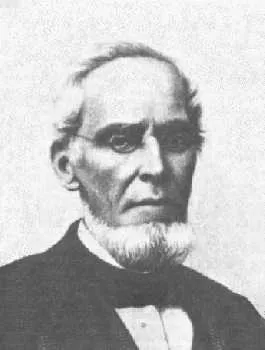 Photo: Gail Borden Jr., via texasproud.com
That horrific voyage home would haunt Borden for years. And his obsession with solving the milk problem would accidentally create one of America's most enduring pantry staples: sweetened condensed milk.
When Fresh Milk Was a Death Sentence
In the 1850s, milk was a dangerous gamble. Without refrigeration, dairy spoiled within hours, especially in summer heat. Urban dairies were notorious breeding grounds for disease — cows crammed into filthy basement stalls, fed on brewery waste, producing milk that killed more children than it nourished. Parents had to choose between giving their kids potentially deadly fresh milk or no milk at all.
Borden had already spent decades chasing impossible preservation dreams. His meat biscuits were supposed to concentrate an entire meal into a portable square. His previous inventions included a prairie schooner that doubled as a sailboat (it capsized on its maiden voyage) and a flying machine that never flew. Friends called him a brilliant dreamer who couldn't finish anything.
But those dead children changed everything.
The Shaker Connection That Cracked the Code
For three years, Borden experimented obsessively with milk preservation. He tried everything: heating it, cooling it, adding chemicals, removing water. Every attempt ended in spoiled, curdled failure. His kitchen became a laboratory of sour experiments. His wife grew tired of cleaning up after his disasters.
The breakthrough came during a visit to a Shaker community in New Lebanon, New York, in 1853. The religious sect was known for innovative farming and food preservation techniques. Borden watched them use a vacuum pan — originally designed for making sugar — to concentrate fruit preserves without burning them.
 Photo: New Lebanon, via c8.alamy.com
That's when it clicked: heat wasn't the enemy. Air was.
By removing air through vacuum evaporation, Borden could concentrate milk at low temperatures, preserving its nutrition while eliminating the bacteria that caused spoilage. After adding sugar as a natural preservative, he had created something unprecedented: milk that could sit on a shelf for months without refrigeration.
From Civil War Rations to Kitchen Staple
Borden received his patent for condensed milk in 1856, but convincing Americans to trust canned dairy proved nearly impossible. Fresh milk was sacred in American culture — how could something from a tin can be better?
Then the Civil War erupted, and everything changed.
The Union Army desperately needed portable nutrition for soldiers. Borden's condensed milk was lightweight, long-lasting, and packed with calories. His factory in Wassaic, New York, worked around the clock producing tins for military rations. Soldiers who had never tasted consistent, safe milk were suddenly carrying it in their pockets.
When those soldiers returned home, they brought new expectations. They had tasted milk that didn't spoil, didn't carry disease, and was available year-round. Borden's Eagle Brand Condensed Milk became the foundation of a dairy empire.
The Sweet Revolution Nobody Saw Coming
What Borden didn't anticipate was how condensed milk would transform American cooking. The added sugar wasn't just a preservative — it was a revelation. Home cooks discovered that this thick, sweet dairy could create desserts impossible with regular milk.
Condensed milk became the secret ingredient in fudge, caramel, and ice cream. It made rich custards possible in kitchens without fresh cream. During the Great Depression, when fresh dairy was expensive, condensed milk kept families fed with affordable nutrition.
By the 1920s, Borden's company was producing millions of cans annually. The distinctive label — featuring his daughter's portrait — became one of America's most recognized brands. Every general store, every pantry, every chuck wagon carried those familiar red and white tins.
The Legacy That Lives in Every Grocery Aisle
Today, nearly 170 years after Borden's first successful batch, sweetened condensed milk remains unchanged. Walk through any American grocery store and you'll find those same distinctive cans, still made using essentially the same vacuum-concentration process Borden perfected.
Modern refrigeration made Borden's original problem obsolete decades ago. Yet condensed milk survived because it had evolved beyond preservation into something else entirely: a unique ingredient that creates textures and flavors impossible to achieve any other way.
Every key lime pie, every homemade fudge, every tres leches cake carries forward Gail Borden's accidental culinary revolution. What started as one man's grief-driven obsession with saving children's lives became an essential tool in America's collective sweet tooth.
The next time you reach for that familiar can, remember: you're holding the result of a failed inventor's refusal to accept that milk had to be dangerous. Sometimes the best accidents come from people who simply won't give up.