When Inmates Ate Better Than Kings: How Prison Innovation Gave America the Perfect Sunday Morning
The Holy Origins of Sunday Morning
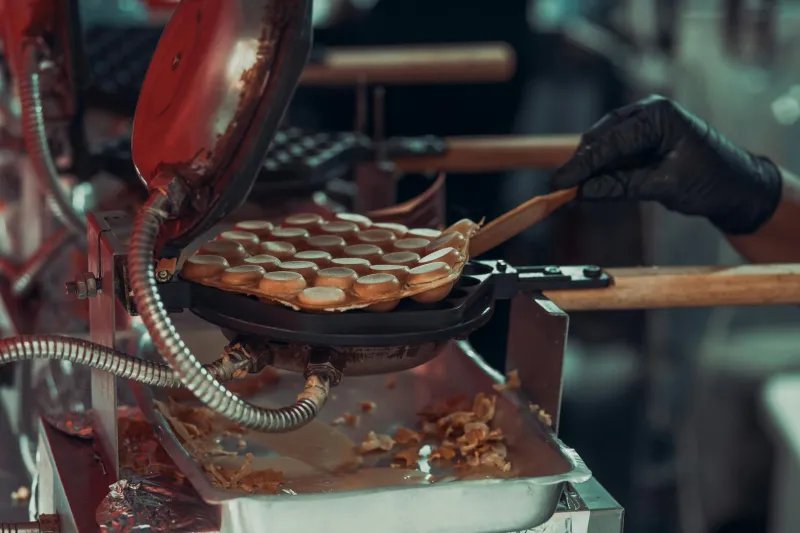
Long before suburban families gathered around kitchen tables for lazy weekend brunches, waffle irons were serving a much more serious purpose: feeding hundreds of people efficiently in medieval European monasteries. What we now consider the ultimate symbol of leisurely weekend indulgence actually began as a solution to one of history's most practical problems — how to feed large groups of people hot food quickly and without waste.
Brother Antoine of the Abbey of Saint-Gall in Switzerland first documented the "waffle" technique in 1393, describing iron plates that could cook batter into perfectly portioned, stackable rounds. The honeycomb pattern wasn't decorative — it was functional, creating pockets that held honey and preserved fruits, making simple grain batter into a complete meal that could sustain monks through long hours of prayer and manual labor.
 Photo: Abbey of Saint-Gall, via www.thehistoryhub.com
But the real innovation wasn't the iron itself. It was the realization that this cooking method could transform cheap ingredients into something that felt special, even luxurious.
From Sacred to Secular: The American Prison Connection
When European immigrants brought waffle iron technology to America in the 1600s, it first found its way not into family kitchens, but into institutional settings where efficiency mattered most. By the 1800s, American prisons, orphanages, and workhouses had discovered that waffle irons could turn basic flour, water, and whatever fats were available into hot meals that prisoners and residents actually wanted to eat.
Warden Samuel Hopkins at Eastern State Penitentiary in Philadelphia wrote in his 1847 report: "The waffle apparatus has proven most beneficial to both morale and nutrition. Inmates consume their full portions with enthusiasm, and the iron griddles require minimal fuel while producing maximum sustenance."
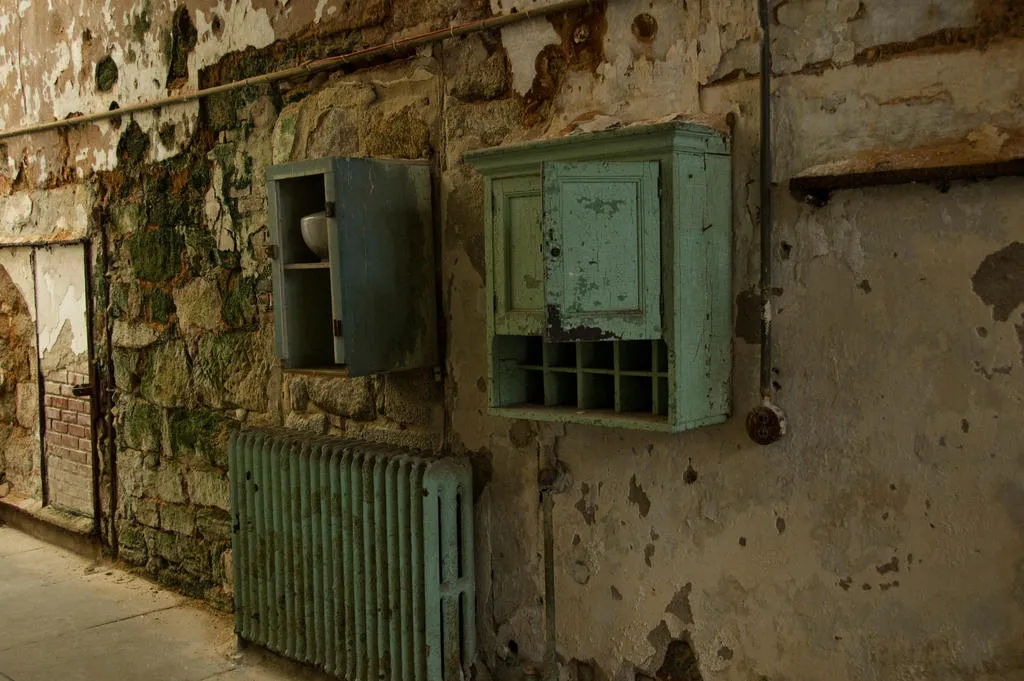 Photo: Eastern State Penitentiary, via images-wixmp-ed30a86b8c4ca887773594c2.wixmp.com
What Hopkins had stumbled onto was something food psychologists now understand: the waffle's texture and appearance triggered psychological responses that made institutional food feel less institutional. The grid pattern created visual interest, the pockets held whatever sweeteners were available, and the cooking process filled dining halls with aromas that reminded people of better times.
The Technology That Changed Everything
The real transformation came during the Industrial Revolution, when cast iron manufacturing made waffle irons affordable for ordinary families. But it was prison innovations that perfected the design. Institutional kitchens needed waffle irons that could withstand constant use, heat evenly, and produce consistent results with whatever ingredients were available.
Prison workshops began manufacturing waffle irons as part of rehabilitation programs, selling them to the general public. By the 1880s, some of America's finest waffle irons were being produced in state penitentiaries across Pennsylvania, New York, and Ohio.
These institutional designs featured deeper grids, better heat distribution, and more durable construction than anything being made for home use. Families who bought prison-made waffle irons discovered they could create restaurant-quality results in their own kitchens.
The Birth of Weekend Ritual
The transition from institutional efficiency to domestic luxury happened gradually, then all at once. As American families moved to suburbs in the early 1900s, weekend breakfast became an opportunity to demonstrate prosperity and domestic harmony. The waffle iron — with its ability to transform simple ingredients into something that looked and tasted special — became the perfect symbol of this new lifestyle.
Food historians point to the 1920s as the moment when waffle-making shifted from practical necessity to weekend ritual. Magazine advertisements began showing families gathered around waffle irons, not as efficient feeding devices, but as tools for creating "special moments" and "family memories."
The irony is profound: a cooking method developed to feed large groups efficiently had become a symbol of intimate, leisurely family time. What started as institutional practicality had evolved into domestic theater.
The Psychology of Sunday Morning
Modern food scientists understand why waffles became so central to American weekend culture. The cooking process itself creates anticipation — you can hear the batter sizzling, smell the developing aromas, and watch the iron steam. Unlike pancakes, which can be made quickly in batches, waffles require patience and attention, forcing families to slow down and wait together.
Dr. Rachel Harrison, who studies food rituals at Cornell University, explains: "Waffle-making is inherently ceremonial. The equipment looks important, the process takes time, and the results are visually dramatic. It transforms ordinary breakfast into an event."
 Photo: Cornell University, via www.thoughtco.com
This ceremonial quality traces directly back to those medieval monasteries where Brother Antoine first described the waffle iron as a tool for creating "sustenance worthy of celebration." He was writing about feeding monks, but he could have been describing suburban Sunday mornings eight centuries later.
The Institutional Innovation That Became Intimate Tradition
Today, Americans own more waffle irons per capita than any other nationality, and Sunday morning waffle preparation remains one of the most consistent family rituals across economic and cultural lines. What's remarkable is how completely we've forgotten the institutional origins of this domestic tradition.
Every time a family gathers around a waffle iron on weekend mornings, they're unconsciously recreating a feeding method perfected in prisons and monasteries. The technology that once efficiently fed inmates and monks now creates some of our most cherished family memories.
The waffle iron's journey from monastery to prison to suburban kitchen reveals something profound about American culture: our genius for transforming practical solutions into emotional experiences. We took a tool designed for institutional efficiency and turned it into a symbol of domestic luxury, creating weekend traditions that feel timeless but are actually rooted in the most utilitarian origins imaginable.