When Chicago Burned, America's Pantries Were Reborn: The Disaster That Created Modern Cooking
The Night That Changed American Kitchens Forever
On the evening of October 8, 1871, Catherine O'Leary was probably not thinking about revolutionizing American cooking when she went to milk her cow. But by the time the Great Chicago Fire finally burned itself out three days later, her barn's legendary flames had accidentally triggered the creation of a kitchen staple that now sits in 98% of American homes.
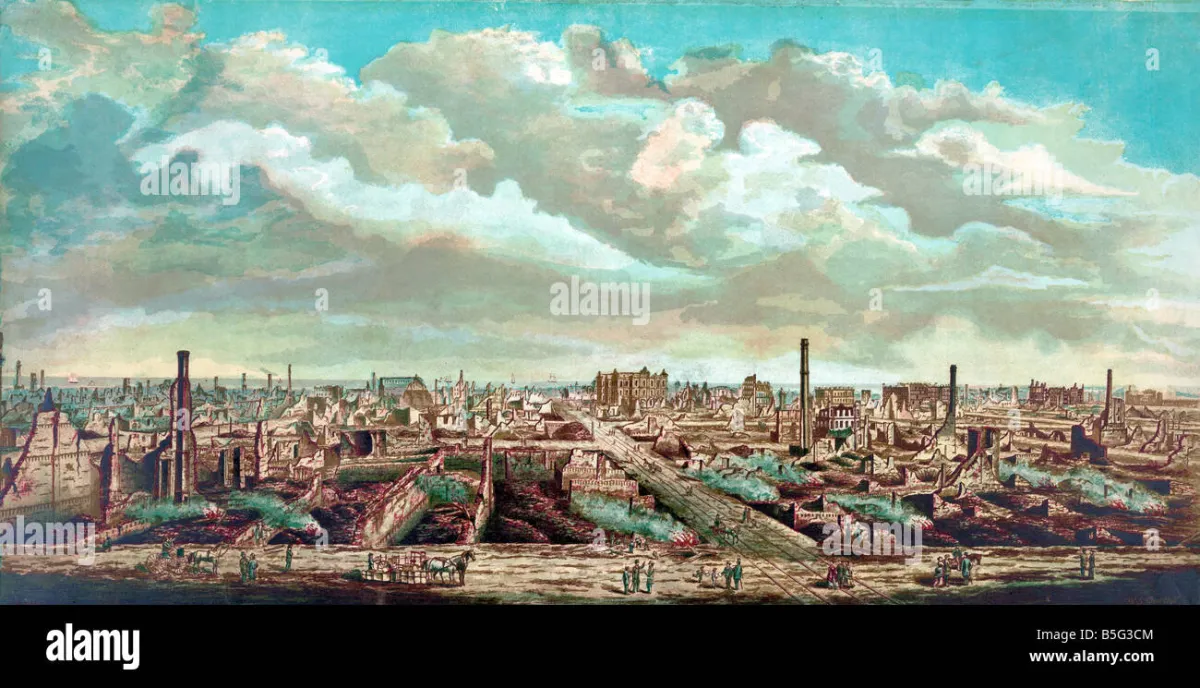 Photo: Great Chicago Fire, via c8.alamy.com
The fire consumed more than just buildings — it destroyed the economic heart of America's grain industry. Chicago was the nation's primary grain storage and trading center, and when the flames reached the massive elevator complexes along the Chicago River, they incinerated roughly 40% of America's stored wheat reserves in a single night.
 Photo: Chicago River, via thumbs.dreamstime.com
What happened next would reshape how Americans cook, eat, and think about food preservation for the next 150 years.
When Desperation Sparked Innovation
In the immediate aftermath of the fire, grain merchants faced catastrophic losses. Millions of bushels of wheat had been reduced to ash, and the approaching winter meant no new harvest until the following spring. Commodity traders who had built fortunes on Chicago's grain trade were suddenly staring at financial ruin.
But one group of merchants, led by Charles Washburn of the Washburn Crosby Company (later General Mills), made a desperate decision that would accidentally change American cooking forever. Instead of accepting their losses, they gathered every grain of salvageable wheat they could find and began experimenting with new preservation techniques.
 Photo: Charles Washburn, via fanpagepress.net
The problem was immediate and urgent: how do you preserve grain when your storage facilities have been destroyed and winter is coming? Traditional storage methods required the massive grain elevators that were now piles of smoking rubble.
The Accidental Revolution
Working with Hungarian immigrant millers who had fled to Chicago after political upheavals in Europe, Washburn's team began experimenting with a milling process that had never been tried on an industrial scale in America. Instead of the traditional stone grinding that produced coarse, perishable flour, they used steel roller mills to create a much finer, more uniform product.
The new process removed more of the wheat germ and bran — the parts that caused flour to spoil quickly — creating a product that could survive without refrigeration for months instead of weeks. They called it "patent flour," and it was born entirely out of post-fire desperation.
What the Chicago merchants didn't realize was that they had just invented the foundation of modern American cooking. This new, shelf-stable flour behaved completely differently from traditional flour. It produced lighter breads, more consistent cakes, and could be combined with other preserved ingredients to create entirely new categories of food.
The Chemistry of Catastrophe
The fire had forced Chicago's grain industry to solve multiple problems simultaneously. The new roller milling process not only preserved flour longer but also standardized it in ways that had never been possible before. Traditional stone-ground flour varied dramatically depending on the wheat variety, growing conditions, and grinding technique. Patent flour was consistent batch after batch.
This consistency was revolutionary. For the first time in human history, home cooks could follow recipes with confidence that their ingredients would behave predictably. A cake recipe that worked in Boston would also work in San Francisco, because the flour was identical.
Food historians now recognize this as the moment when cooking shifted from craft to science. The Great Chicago Fire had accidentally created the first truly standardized cooking ingredient.
Building the Modern American Pantry
The success of patent flour triggered a cascade of innovations. If flour could be preserved and standardized, why not other ingredients? Chicago's rebuilt food industry became a laboratory for creating shelf-stable versions of traditional cooking staples.
Baking powder, which had existed in crude forms since the 1840s, was refined and standardized using the same principles developed for patent flour. Sugar processing was revolutionized to create the fine, consistent granules that modern recipes require. Even salt was processed to remove impurities and create the free-flowing product that Americans now take for granted.
By 1880, less than a decade after the fire, American grocery stores looked completely different. Where once they had sold mainly fresh and bulk ingredients that varied by season and region, they now stocked rows of branded, standardized products that promised consistent results.
The Unintended Consequences of Disaster
The transformation went far beyond individual ingredients. The fire had created something entirely new: the modern American pantry. For the first time, ordinary families could stock their kitchens with ingredients that would last for months without spoiling and would behave predictably in recipes.
This shift enabled the rise of cookbook publishing, cooking schools, and eventually the entire modern food media industry. When ingredients became standardized, recipes could be shared reliably across vast distances. The Betty Crocker phenomenon, cake mixes, and even modern cooking shows all trace their origins back to the consistent ingredients that emerged from post-fire Chicago.
From Ashes to Empire
The companies that survived the Great Chicago Fire by innovating new preservation techniques became the foundation of America's modern food industry. General Mills, Pillsbury, and dozens of other brands that still dominate grocery store shelves today were built on technologies developed in the desperate months after October 1871.
Charles Washburn's Washburn Crosby Company became General Mills. The roller mill techniques perfected in post-fire Chicago spread across the country, transforming regional grain mills into national food companies. The disaster that could have destroyed America's grain industry instead gave birth to the modern processed food industry.
The Kitchen Revolution Hidden in Plain Sight
Today, when you open your pantry and see bags of all-purpose flour, boxes of baking powder, and containers of fine granulated sugar, you're looking at the direct descendants of innovations born from catastrophe. The Great Chicago Fire didn't just rebuild a city — it accidentally created the standardized ingredients that make modern cooking possible.
Every time you follow a recipe and expect consistent results, you're benefiting from technologies developed by desperate merchants trying to salvage their businesses from the ashes of Chicago. The fire that destroyed America's grain storage accidentally created the preserved, standardized ingredients that would define American cooking for the next century and beyond.
The next time you reach for that bag of flour, remember: you're not just grabbing a cooking ingredient. You're holding the product of one of the most catastrophic nights in American history — and one of the most accidentally revolutionary.