The Flavor Nobody Wanted: How Vanilla Survived Extinction to Become America's Obsession
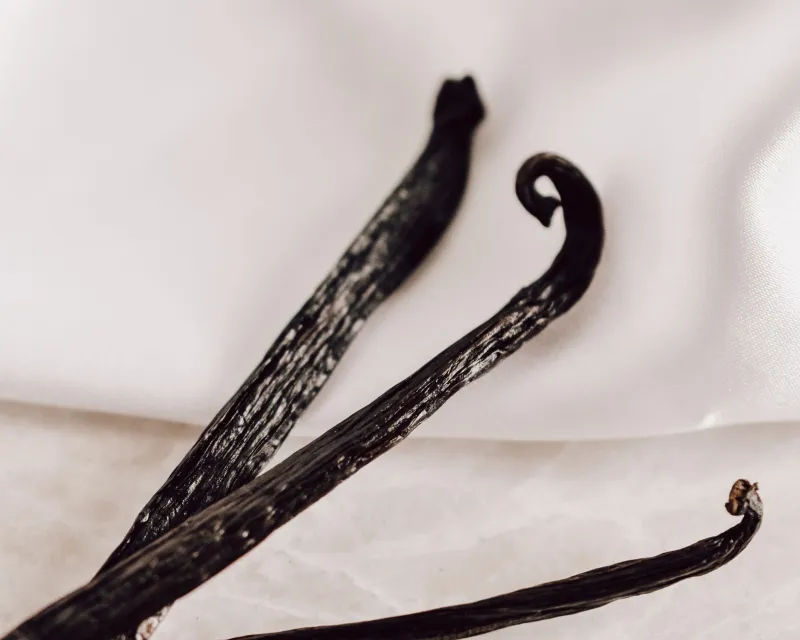
Somewhere along the way, vanilla became the word we use when we mean boring. Plain. Unremarkable. It's the default, the baseline, the thing you choose when you can't be bothered to choose anything else. Which makes it genuinely strange that vanilla — real vanilla — is one of the most labor-intensive, botanically peculiar, historically improbable flavors on earth. The story of how it went from near-extinction to the inside of every American birthday cake is a wild ride through colonial miscalculation, agricultural disaster, and a chemistry experiment that changed everything.
It Started With a Monopoly Nobody Could Break
Vanilla is the seed pod of a climbing orchid — Vanilla planifolia — that grows natively in Mexico. For centuries, the Totonac people of the Gulf Coast cultivated it, and later the Aztec empire incorporated it into a prized drink made with cacao. When Spanish conquistadors arrived in the early 16th century, they encountered vanilla as part of the royal court's chocolate preparations and immediately recognized that they had something extraordinary on their hands.
They were right. But they also had a problem they wouldn't fully understand for another three hundred years. Vanilla orchids, it turns out, can only be pollinated by a specific species of bee — the Melipona — that exists exclusively in Mexico. No bee, no pollination. No pollination, no seed pods. No seed pods, no vanilla.
For nearly three centuries, every attempt to grow vanilla outside of Mexico failed completely. The Spanish brought cuttings to their other colonies. The plants grew beautifully, flowered on schedule, and then produced absolutely nothing. European botanists were baffled. The vanilla monopoly held, not because the Spanish enforced it particularly well, but because the Mexican bee simply refused to travel.
The Boy Who Solved a Three-Hundred-Year Problem
The breakthrough came in 1841, on the French colonial island of Réunion in the Indian Ocean, and it came from an unlikely source: a twelve-year-old enslaved boy named Edmond Albius.
Albius, working on a plantation owned by a botanist named Ferréol Bellier-Beaumont, figured out through observation and experimentation that vanilla orchids could be hand-pollinated using a thin stick or a blade of grass to transfer pollen between flowers. The technique took only seconds per flower, required no specialized tools, and worked perfectly. Albius demonstrated it to his enslaver, who recognized the significance immediately.
Within years, vanilla cultivation spread to Madagascar, Tahiti, and other tropical regions. Albius received no lasting credit during his lifetime — he died in poverty — but his technique is still the method used by every vanilla farmer in the world today. Every bean you've ever scraped into a batch of cookies exists because of what he figured out.
The Crisis That Nearly Ended Everything
You'd think that solving the pollination problem would have secured vanilla's future. It didn't. In the 1870s, a combination of crop disease, political instability in the major growing regions, and wildly inconsistent harvests sent vanilla prices into chaos. The spice had become fashionable in European and American kitchens — Thomas Jefferson famously brought a taste for vanilla back from France and is credited with popularizing vanilla ice cream in the United States — but supply could never keep pace with demand.
American bakers and confectioners were caught in an impossible position. Vanilla was the flavor everyone wanted, but the real thing was expensive, unreliable, and sometimes simply unavailable. Something had to give.
The Accident in the French Laboratory
The solution arrived not from a farm but from a chemistry lab. In 1874, German scientists Ferdinand Tiemann and Wilhelm Haarmann synthesized vanillin — the primary aromatic compound in vanilla — from coniferin, a substance found in pine bark. It was the first time a natural flavor compound had been artificially replicated, and it was, by most accounts, a complete accident. They were studying the chemistry of plant compounds and stumbled onto the fact that coniferin, when treated with certain oxidizing agents, produced something that smelled unmistakably of vanilla.
French chemists quickly refined the process, and by the 1890s, synthetic vanillin was being produced commercially at a fraction of the cost of the real thing. American food manufacturers adopted it almost immediately. Extract producers began blending synthetic vanillin with alcohol to create imitation vanilla extract, which hit grocery shelves at a price that made real vanilla look absurd by comparison.
The timing was critical. American baking was in the middle of a domestic revolution — cookbooks were proliferating, middle-class kitchens were being outfitted with modern stoves, and the idea of baking at home for your family was becoming a cultural expectation rather than a necessity. Vanilla, now affordable and consistent, became the flavor that tied it all together.
From Luxury to Everyday
By the early 20th century, vanilla had completed its transformation. What had once been a rare colonial import — traded carefully, used sparingly, reserved for the wealthy — was now a standard pantry item. McCormick's vanilla extract was in kitchens from Maine to California. Vanilla ice cream had become the most popular flavor in the country. Vanilla-scented everything followed: candles, perfumes, lip balm, breakfast cereals.
The irony is profound. A flavor that nearly disappeared due to a botanical quirk, that survived only because of a child's ingenuity, and that scaled up only through an accidental chemistry discovery, became so ubiquitous that we stopped noticing it. We made it the word for ordinary.
Real vanilla — the hand-pollinated, sun-dried, months-long cured pod from Madagascar or Mexico — is still one of the most expensive food ingredients by weight in the world. Farmers still use Edmond Albius's technique, flower by flower, by hand. The next time you crack open a bottle of vanilla extract or scrape a bean into your custard, that's the story hiding in the smell.