The Forgotten Man Who Froze America's Future — and Never Got the Credit
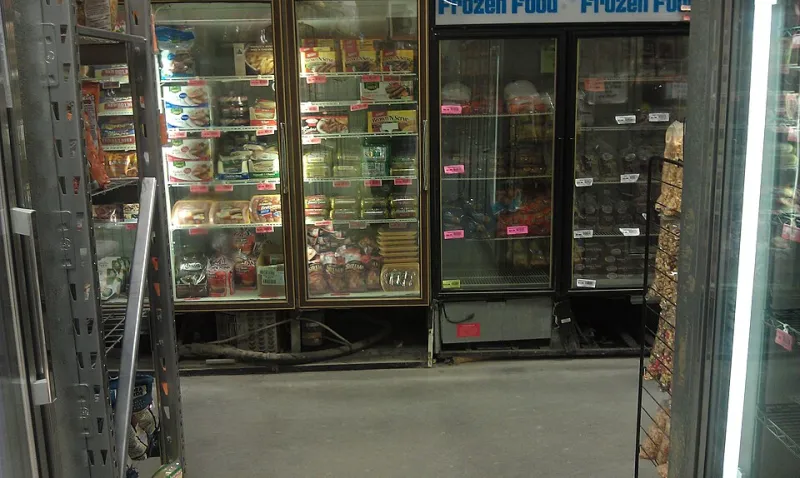
Photo: vofuth, CC BY 2.0, via Wikimedia Commons
Walk into any grocery store in America and you'll pass the freezer aisle without thinking much about it. Bags of peas, boxes of waffles, pizzas, burritos, fish fillets, ice cream in seventeen flavors. It's just there, humming quietly, fogging up slightly when you open the glass door. It feels as permanent and obvious as the produce section or the checkout lanes.
It wasn't obvious. Not even close. The freezer aisle had to be invented — and then it had to be sold, not just to stores, but to an entire country that had spent generations believing that frozen food was either impossible, unsafe, or deeply beneath them.
The man who changed that spent years being ignored. His name was Clarence Birdseye, and his story is one of the more remarkable accidental revolutions in American food history.
A Lab Technician in the Arctic
Clarence Birdseye was not a chef, not a grocer, and not particularly interested in the food industry when he stumbled onto the idea that would define his life. In 1912, he was working as a field naturalist and fur trader in Labrador, in the remote northeastern corner of Canada. It was cold. Deeply, relentlessly cold — the kind of cold that shapes everything you do.
What Birdseye noticed, watching the Inuit people who lived and worked in that environment, was that fish pulled from the water in subzero temperatures froze almost instantly — and when thawed and cooked weeks later, tasted remarkably fresh. Nothing mushy, nothing off. Just fish that tasted like fish.
Back home in America, frozen food already existed in a technical sense. Meat and produce had been stored in ice and cold rooms for decades. But the results were usually disappointing — textures turned mushy, flavors faded, and the whole enterprise felt like a compromise. What Birdseye had observed in Labrador was different. The speed of freezing was the key. Slow freezing created large ice crystals that damaged food cells and ruined texture. Fast freezing — extreme cold, applied quickly — preserved the cellular structure almost intact.
It sounds simple now. In 1915, it was a revelation.
From Fish Shack to Factory
Birdseye spent years tinkering. He experimented with buckets of brine, with fans, with refrigeration equipment cobbled together in rented spaces. He tried vegetables, seafood, meat. He failed constantly, iterated obsessively, and burned through money he didn't have.
By the early 1920s, he had developed a working method for quick-freezing packaged food using a system of refrigerated belts and pressure plates. He started a company — the General Seafood Corporation — out of Gloucester, Massachusetts, and began producing frozen fish in small quantities.
The public response was underwhelming. Housewives weren't interested. Grocers had no way to store or display frozen products. The infrastructure didn't exist, the consumer trust wasn't there, and the product looked strange and unfamiliar in a market where fresh food was the gold standard.
Birdseye was running out of runway when, in 1929, the Postum Company — which would later become General Foods — bought his patents, his equipment, and his company for $22 million. It was one of the largest acquisitions in American food history at that point.
Birdseye walked away with his name on the brand and not much else. The company that bought him out had the capital and the distribution muscle to do what he never could: build the freezer aisle from scratch.
The Infrastructure Problem
Even with General Foods behind it, frozen food moved slowly. The real obstacle wasn't the technology — it was the cold chain. To sell frozen food in grocery stores, you needed refrigerated warehouses, refrigerated trucks, and refrigerated display cases in the stores themselves. None of that existed at scale in 1930.
General Foods spent years and significant capital installing freezer display cases in test markets, negotiating with retailers, and running consumer education campaigns that tried to convince American housewives that frozen food wasn't a lesser product — it was a modern one.
World War II did more to advance the cause than any marketing campaign could. With canned goods rationed and fresh produce inconsistent, frozen vegetables became a practical necessity for millions of American families. Frozen food stopped being a novelty and started being a solution.
By the late 1940s, the freezer aisle was a fixture. By the 1950s, it was expanding rapidly — and Swanson's introduction of the TV dinner in 1953 turned the frozen aisle into a cultural phenomenon. Convenience wasn't a compromise anymore. It was an aspiration.
What Birdseye Actually Left Behind
Clarence Birdseye died in 1956, wealthy but not particularly famous outside the food industry. His name became a brand, which meant most people thought of it as a logo rather than a person. The deeper story — the Labrador winters, the brine buckets, the years of failed experiments — mostly disappeared into the background.
What he left behind is harder to quantify than a brand name. The freezer aisle reshaped how Americans planned meals, shopped for groceries, and thought about food preparation. It made seasonality optional. It made the weekly grocery run possible. It let vegetables grown in California end up on a dinner table in Ohio in January, tasting more or less like themselves.
None of that was inevitable. Someone had to notice what was happening in the Arctic, figure out why it worked, and spend years insisting that it mattered.
Next time you reach into the freezer aisle for a bag of peas, Clarence Birdseye is the reason they're there. He just never got to introduce himself.