Turkey Didn't Always Own Thanksgiving — Here's Who Put It on the Table
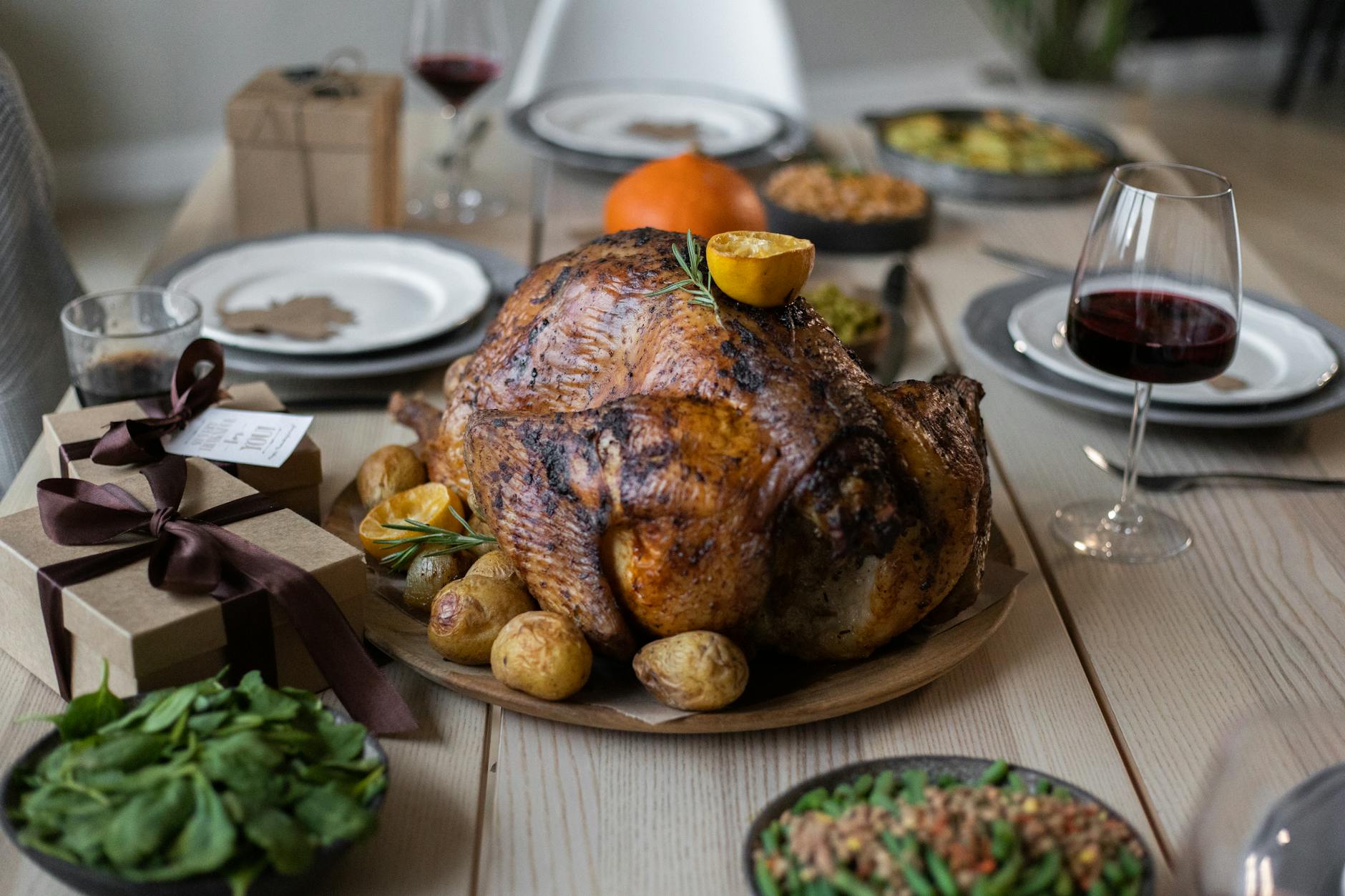
Turkey Didn't Always Own Thanksgiving — Here's Who Put It on the Table
Every fourth Thursday in November, roughly 46 million turkeys meet their end in service of an American tradition. The bird is so central to the holiday that Thanksgiving has another name: Turkey Day. It appears on decorations, in children's drawings, on table centerpieces. It is, by any measure, the most iconic food in the American holiday calendar.
So it might come as a surprise to learn that the Pilgrims almost certainly didn't eat turkey at the 1621 harvest celebration most Americans think of as the first Thanksgiving. And it might come as an even bigger surprise to learn that turkey's iron grip on the holiday menu wasn't truly cemented until the middle of the 20th century — thanks in part to a wartime meat shortage and an industry that knew a marketing opportunity when it saw one.
What Was Actually on the Table in 1621
Let's start with the Pilgrims, because that's where the myth begins. The 1621 harvest feast at Plymouth Colony is the event most Americans point to as the origin of Thanksgiving. And while a celebration did take place, the historical record — thin as it is — suggests the menu looked nothing like a modern Thanksgiving spread.
Edward Winslow, one of the colonists who was actually there, wrote a brief account of the feast. He mentioned wildfowl, venison, and fish. The "wildfowl" could have been ducks or geese as easily as turkey. There's no mention of stuffing, cranberry sauce, or pie. The gathering lasted three days and included around 90 Wampanoag guests — it was less a solemn American ritual and more a practical celebration of a harvest that had finally gone right after a brutal year.
Turkey doesn't dominate that story. It barely appears in it.
The Woman Who Invented the Holiday
For the next two centuries, Thanksgiving was celebrated inconsistently — some states observed it, others didn't, and the date varied wildly. There was no national holiday, no fixed tradition, and certainly no consensus about what should be served.
That changed largely because of one remarkably determined woman named Sarah Josepha Hale. She's not a household name today, but she probably should be. Hale was the editor of Godey's Lady's Book, the most widely read magazine in America during the mid-1800s, and she spent nearly 40 years campaigning for Thanksgiving to become a national holiday. She wrote editorials, petitioned governors, and sent letters to multiple presidents.
She also wrote fiction. In 1827, she published a novel called Northwood that included a lengthy, loving description of a New England Thanksgiving dinner — centered on a roasted turkey. Hale returned to this image again and again in her writing, consistently placing turkey at the heart of what she imagined as the ideal American holiday meal. She wasn't reporting on an existing tradition. She was building one.
In 1863, President Lincoln finally listened. He declared Thanksgiving a national holiday, in part responding to Hale's decades of advocacy. The holiday now had a fixed date, a national identity — and, thanks largely to Hale's influential pen, an unofficial signature dish.
Why Turkey and Not Something Else
Hale's promotion of turkey wasn't entirely arbitrary. There were practical reasons the bird made sense as a celebratory food in 19th-century America. Unlike cows, which provided milk, or chickens, which laid eggs, a turkey had no secondary economic purpose. Killing one didn't cost you anything beyond the bird itself. Turkeys were also large enough to feed a family in one sitting, which made them practical for a holiday meal.
They were also, by autumn, fat and ready. Turkeys raised over the summer were at their best in November, which aligned perfectly with the harvest-season timing of the holiday. Geography helped too — turkeys were native to North America, which gave the bird a certain symbolic resonance that a European import like a Christmas goose simply couldn't match.
The Industry That Sealed the Deal
By the early 20th century, turkey at Thanksgiving was a popular but not yet universal tradition. Plenty of American families still served chicken, goose, ham, or whatever was most affordable and available. The holiday meal was regional, variable, and personal.
Then came World War II, and with it, federal food rationing. Beef, pork, and chicken were all rationed to support the war effort. Turkey was not. The U.S. government actively encouraged Americans to eat turkey, and the turkey farming industry — recognizing a once-in-a-generation opportunity — scaled up production and pushed the bird hard. Wartime Thanksgivings became turkey Thanksgivings almost by default, and the habit stuck long after rationing ended.
The postwar turkey industry had no intention of giving up that ground. Lobbying efforts, promotional campaigns, and the sheer momentum of habit all worked together to make the bird's position on the Thanksgiving table feel permanent and inevitable. By the 1950s, it effectively was.
Tradition Is a Story Someone Decided to Tell
What the real history of the Thanksgiving turkey reveals is something worth sitting with: most traditions aren't ancient. They're assembled, often recently, by specific people with specific interests — a magazine editor with a vision for American domestic life, a wartime government making the best of food scarcity, an industry that understood the power of repetition.
That doesn't make the tradition less meaningful. There's genuine warmth in the ritual, in the gathering, in the shared meal. But understanding where it actually came from makes the whole thing more interesting — and maybe a little more honest.
Sarah Josepha Hale wanted Americans to have a national holiday centered on gratitude and togetherness. She got it. She also, almost single-handedly, decided what would be on the table. Not bad for someone most Americans have never heard of.