The Vacation That Changed Medicine Forever — How a Messy Lab Became Humanity's Greatest Lifesaver
The Scientist Who Hated Cleaning Up
Alexander Fleming was brilliant, but he was also famously messy. His colleagues at St. Mary's Hospital in London knew better than to expect pristine lab benches from the Scottish bacteriologist. Petri dishes stacked up like dirty dinner plates, cultures grew forgotten in corners, and Fleming seemed to thrive in what others might call chaos.
In the summer of 1928, this slovenly habit would accidentally save millions of lives.
A Holiday That Left More Than Memories
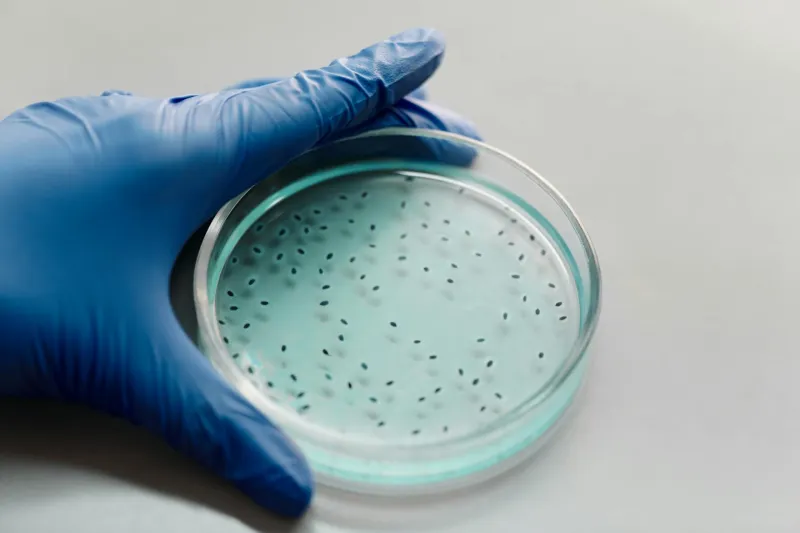
Before heading off for his August vacation, Fleming did what he always did — he left his work exactly where it was. Petri dishes filled with Staphylococcus bacteria cultures sat abandoned on his lab bench, some stacked in a tray of lysol disinfectant (though not submerged enough to actually kill anything).
Most scientists would have cleaned up before leaving. Fleming just walked away.
While he was gone, London experienced an unusually cool spell. The lab windows stayed open, spores drifted in from the street, and something magical happened in that cluttered, abandoned workspace. A rogue mold spore — likely Penicillium notatum — landed on one of Fleming's bacterial cultures and began to grow.
The Mess That Made History
When Fleming returned in early September, he began the tedious task of examining his old cultures before discarding them. Most were exactly what you'd expect — contaminated, overgrown, ready for the trash.
But one dish made him pause.
Around a patch of blue-green mold, the Staphylococcus bacteria had simply vanished. Where there should have been a lawn of harmful bacteria, there was nothing but clear space. The mold hadn't just competed with the bacteria — it had actively destroyed them.
A more fastidious researcher might never have seen this. They would have thrown out the contaminated cultures immediately, sterilized everything, and started fresh. Fleming's messiness had created the perfect conditions for serendipity.
From Curiosity to Cure
Fleming's initial reaction wasn't "Eureka!" — it was more like "That's interesting." He showed the dish to his assistant, commenting on the unusual bacterial clearing around the mold. But Fleming understood he was looking at something potentially revolutionary.
He carefully isolated the mold and began testing its bacteria-killing properties. The substance it produced — which he named penicillin after the Penicillium mold — proved effective against a wide range of harmful bacteria, including Streptococcus, Staphylococcus, and pneumonia-causing organisms.
Yet Fleming hit a wall. He couldn't figure out how to extract and purify penicillin in large quantities. His 1929 paper on the discovery was largely ignored by the medical community. For over a decade, penicillin remained little more than a laboratory curiosity.
The War That Changed Everything
World War II transformed penicillin from scientific footnote to medical miracle. As battlefield casualties mounted, researchers Howard Florey and Ernst Boris Chain at Oxford University revisited Fleming's forgotten discovery. They developed methods for mass-producing penicillin, and by 1943, pharmaceutical companies were manufacturing it by the ton.
American soldiers carried penicillin into D-Day. Infections that would have meant amputation or death became treatable with a simple injection. The mortality rate from bacterial pneumonia dropped from 30% to just 3%.
Suddenly, Fleming's messy lab accident was saving thousands of lives every day.
The Ripple Effect of One Moldy Dish
Penicillin didn't just treat infections — it launched the entire antibiotic age. Streptomycin followed in 1944, treating tuberculosis. Chloramphenicol came in 1947. Tetracycline in 1948. Each new antibiotic built on Fleming's accidental foundation.
Before antibiotics, simple cuts could turn fatal. Childbirth carried enormous infection risks. Pneumonia was often a death sentence. Fleming's discovery transformed these everyday dangers into manageable medical issues.
Today, we live in a world shaped by that abandoned petri dish. Routine surgeries became possible because post-operative infections became treatable. The average human lifespan increased dramatically. Modern medicine as we know it exists because one scientist was too messy to clean up before vacation.
The Beautiful Accident
Fleming later admitted that penicillin's discovery was "a triumph of accident and shrewd observation." But perhaps that's exactly how the best discoveries happen — not through rigid planning and sterile conditions, but through the messy, unpredictable intersections of preparation and chance.
Every time you take an antibiotic, you're benefiting from Fleming's slovenly habits and that cool London summer when a mold spore drifted through an open window. Sometimes the most life-changing moments begin with the simplest accidents.
In a world obsessed with cleanliness and control, Fleming's story reminds us that a little mess — and a willingness to look closely at unexpected results — might just change everything.