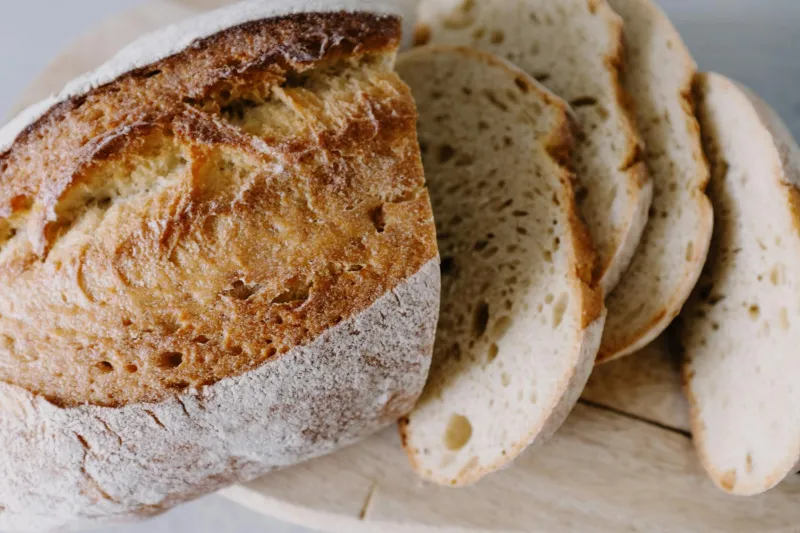
In 1928, when the first loaf of machine-sliced bread rolled off the line in Chillicothe, Missouri, local newspapers barely noticed. The Chillicothe Constitution-Tribune buried the story on page six, treating it like any other minor business update. Nobody realized they were witnessing the debut of what would become America's benchmark for innovation.
The man behind this revolution wasn't a baker, chef, or even someone particularly interested in food. Otto Frederick Rohwedder was a jeweler from Iowa who became obsessed with a mechanical challenge that consumed sixteen years of his life—and nearly destroyed it.
The Problem That Wasn't Really a Problem
In 1912, Rohwedder sold his successful jewelry stores in St. Joseph, Missouri, to pursue what everyone around him considered a ridiculous idea: building a machine that could slice bread uniformly and package it for sale. His friends and family thought he'd lost his mind.
And honestly, they had a point. Bread slicing wasn't exactly a crisis plaguing American households. People had been cutting their own bread for thousands of years using perfectly adequate knives. Fresh bread from local bakeries was widely available, and most families had developed their own techniques for getting the thickness they preferred.
But Rohwedder saw inefficiency where others saw tradition. He was convinced that machine-sliced bread would be more uniform, more convenient, and would help bakeries serve customers faster. The fact that nobody was asking for this solution didn't deter him—if anything, it made him more determined to prove the concept.
Sixteen Years of Beautiful Failures
Rohwedder's first prototype was a disaster. The machine worked mechanically, but the sliced bread went stale almost immediately. Without the protective barrier of an intact crust, the inner bread dried out within hours. His early attempts to solve this problem involved everything from special wrapping techniques to metal pins that held the slices together after cutting.
In 1917, a fire destroyed his prototype and all his blueprints. Most people would have taken this as a sign to return to jewelry. Rohwedder rebuilt everything from memory and kept experimenting.
The breakthrough came when he realized that slicing and packaging had to happen simultaneously. His final design not only cut bread into uniform slices but immediately wrapped the entire loaf in wax paper, preserving freshness while maintaining convenience. The machine was massive, expensive, and required significant modifications to existing bakery workflows.
The Skeptical Debut
When the Chillicothe Baking Company finally agreed to test Rohwedder's machine in July 1928, local customers were underwhelmed. Many preferred to slice their own bread, suspicious that pre-sliced loaves were somehow inferior or less fresh. Some complained that the slices were too uniform, lacking the character of hand-cut bread.
The real resistance came from bakers themselves. Rohwedder's machine was expensive, took up significant floor space, and required training to operate properly. Many established bakeries saw it as an unnecessary complication to their existing processes.
But Frank Bench, owner of the Chillicothe Baking Company, noticed something interesting in his sales data. Despite the lukewarm reception, sliced bread was selling consistently. Customers who initially bought it out of curiosity kept coming back. The convenience factor was slowly winning over skeptics.
The Wartime Test Nobody Expected
Sliced bread's true test came fifteen years later, during World War II. In January 1943, the U.S. government temporarily banned the sale of sliced bread as a wartime conservation measure, claiming it required excessive packaging materials and encouraged waste.
The public reaction was swift and furious. Housewives wrote angry letters to newspapers. Bakeries reported customers stockpiling unsliced loaves and demanding tutorials on proper slicing techniques. The ban lasted only two months before officials quietly reversed it, admitting that the conservation benefits were minimal compared to the public outcry.
That brief prohibition proved just how thoroughly sliced bread had integrated into American daily life. What started as Otto Rohwedder's personal obsession had become something people couldn't imagine living without.
From Novelty to Necessity
By the 1950s, sliced bread had become so ubiquitous that it spawned its own cultural metaphor. "The greatest thing since sliced bread" entered American vocabulary as the ultimate standard for innovation, even though most people using the phrase had no idea who Otto Rohwedder was or how much effort went into creating their morning toast.
Rohwedder himself never became wealthy from his invention. He sold his patents and returned to working for other companies, watching from the sidelines as his obsession transformed American eating habits. He died in 1960, largely forgotten by a public that used his innovation daily.
The Lesson in the Loaf
Otto Rohwedder's story reveals something fascinating about innovation: sometimes the most transformative ideas address problems we didn't know we had. Nobody was demanding machine-sliced bread in 1912, but once it existed, returning to hand-slicing felt like moving backward.
Today, when we grab a loaf of bread at the grocery store, we're benefiting from one man's sixteen-year obsession with mechanical precision. Rohwedder's determination to solve a "problem" nobody had asked him to fix created a convenience so fundamental that we literally use it as our measure for great ideas.
The next time you make a sandwich, remember the Missouri jeweler who spent nearly two decades perfecting something the world thought it didn't need—and then couldn't imagine living without.