The Kitchen Mistake That Created America's Favorite Cookie
When Running Out of Ingredients Led to Culinary History
Ruth Wakefield was having one of those days. It was 1938, and the owner of the Toll House Inn in Whitman, Massachusetts, was preparing her usual batch of Butter Drop Do cookies for guests when she discovered her pantry was nearly bare of baker's chocolate. Most cooks would have postponed baking or sent someone to the store. Ruth decided to improvise.
She grabbed a bar of Nestlé semi-sweet chocolate, broke it into small pieces, and stirred them into her cookie dough. Her logic seemed sound enough—the chocolate would melt during baking and distribute evenly throughout the cookies, just like baker's chocolate would. Except it didn't.
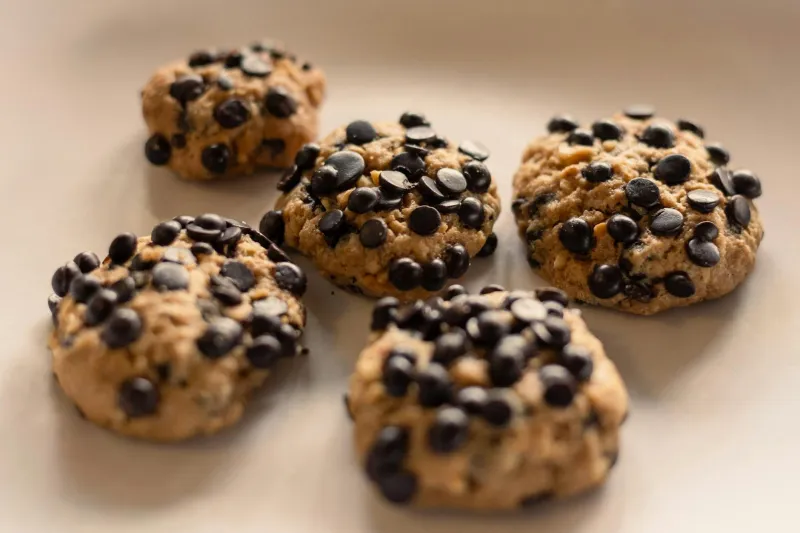
When Ruth pulled those cookies from the oven, the chocolate pieces had held their shape, creating little pockets of sweetness scattered throughout each golden-brown disc. She'd accidentally invented what would become America's most beloved cookie.
The Happy Accident That Wouldn't Stay Secret
The Toll House Inn sat along a well-traveled route between Boston and New Bedford, and word about Ruth's unusual cookies spread quickly among travelers. Guests began asking specifically for her "chocolate crunch cookies," and Ruth found herself baking batch after batch to meet demand.
What made these cookies special wasn't just their taste—it was their texture. Unlike other chocolate cookies of the era, which were typically soft and cake-like, Ruth's creation offered contrast. The crispy cookie provided the perfect vehicle for bursts of rich, melted chocolate that had softened just enough during baking to become irresistible.
Ruth published the recipe in a Boston newspaper in 1938, calling them "Toll House Chocolate Crunch Cookies." The response was immediate and overwhelming. Home bakers across New England began seeking out Nestlé chocolate bars specifically to recreate Ruth's accidental masterpiece.
The Deal That Changed American Baking Forever
Nestlé noticed something peculiar happening in the late 1930s—sales of their semi-sweet chocolate bars were skyrocketing in the New England region. When they investigated, they discovered Ruth Wakefield's recipe was driving the surge. Rather than view this as simple good fortune, Nestlé saw an opportunity.
In 1939, the company approached Ruth with a proposition that would seem almost quaint by today's corporate standards. They wanted to print her recipe on their chocolate bar packaging and use the Toll House name. In exchange, they offered Ruth a lifetime supply of chocolate and $1.
Yes, one dollar.
Ruth accepted, perhaps not realizing she was signing away rights to what would become one of the most recognizable recipes in American history. But the deal worked brilliantly for everyone involved. Nestlé gained a marketing goldmine, Ruth got the chocolate she needed for her inn, and American home bakers got easy access to the recipe that was already becoming legendary.
From Regional Curiosity to National Obsession
By 1940, Nestlé was selling pre-scored chocolate bars that made breaking off pieces easier. But the real game-changer came in 1941 when they introduced something that seems obvious in hindsight but was revolutionary at the time: chocolate chips.
These small, uniform pieces were designed specifically for baking, eliminating the need to chop chocolate bars. The yellow bag of Nestlé Toll House morsels became a fixture in American pantries, and Ruth's recipe—virtually unchanged from her original 1938 experiment—was printed on every package.
World War II actually helped spread the cookie's popularity. Care packages sent to soldiers overseas often included homemade chocolate chip cookies because they traveled well and provided a taste of home. When those soldiers returned, they brought their craving for the cookies with them, cementing the treat's place in American culture.
The Recipe That Never Needed Fixing
Walk into any American kitchen today, and you'll likely find that familiar yellow bag with Ruth's recipe still printed on the back. The proportions remain essentially identical to what she created in 1938: butter, brown sugar, white sugar, eggs, vanilla, flour, baking soda, salt, and chocolate chips.
This consistency is remarkable in an era of constant recipe modifications and "improvements." Food scientists have analyzed why Ruth's accidental formula works so perfectly—the ratio of sugars creates the ideal chewy-crispy texture, while the butter content ensures the cookies spread just enough without becoming flat.
The Sweet Legacy of a Kitchen Shortcut
The Toll House Inn burned down in 1984, but Ruth Wakefield's accidental invention had long since outgrown its birthplace. Today, chocolate chip cookies account for nearly half of all cookies baked in American homes. The recipe has spawned countless variations, from adding nuts to experimenting with different types of chocolate, but the basic formula remains Ruth's.
Perhaps most remarkably, this kitchen mistake created an entirely new category of cookie. Before 1938, cookies were generally uniform throughout—chocolate cookies were chocolate, sugar cookies were sugar. Ruth's accident introduced the concept of mix-ins, paving the way for everything from oatmeal raisin to white chocolate macadamia nut cookies.
Sometimes the best discoveries happen when we run out of what we think we need and make do with what we have. Ruth Wakefield's chocolate chip cookies remind us that innovation often comes not from following recipes perfectly, but from the happy accidents that occur when we're willing to improvise in the kitchen.