The Holy Accident That Made Every Celebration Pop: When a Monk's Wine Went Wrong and Created History
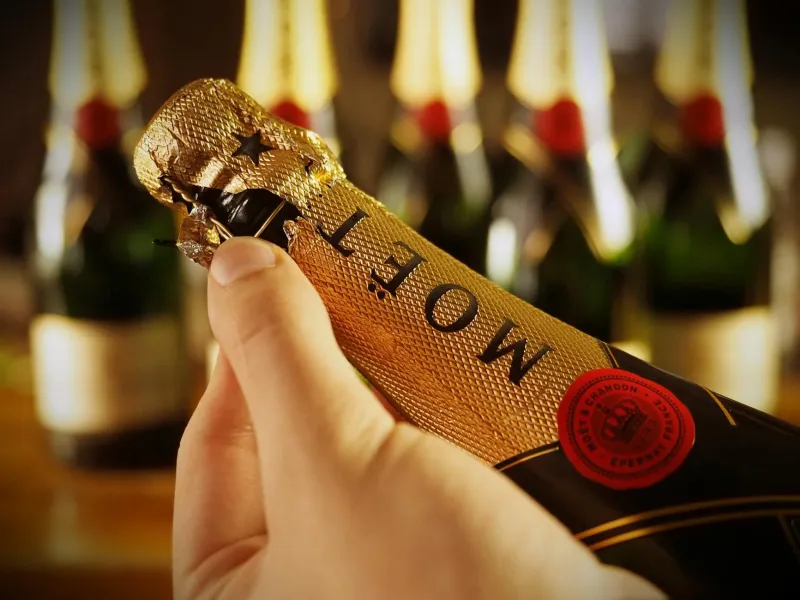
Every time you hear the satisfying pop of a champagne cork at a wedding or New Year's Eve party, you're celebrating one of history's most famous accidents. The man behind those bubbles, Dom Pierre Pérignon, spent years trying to eliminate them from his wine, convinced they were a sign of terrible winemaking.
The irony is almost too perfect: the drink that now symbolizes luxury and celebration was born from what a 17th-century French monk considered his biggest professional failure.
The Problem Nobody Asked Him to Solve
In 1668, when Dom Pérignon became cellar master at the Abbey of Hautvillers in France's Champagne region, he inherited a frustrating problem. The wines kept developing strange bubbles during the cold winter months, and conventional wisdom said this made them undrinkable—even dangerous.
The bubbles weren't intentional. They appeared because fermentation would slow down during winter, then restart when spring warmed the cellars. This secondary fermentation created carbon dioxide that had nowhere to go but into the wine itself. Most winemakers of the era considered it a defect that made wine taste sharp and unpredictable.
Pérignon was determined to fix it. For nearly two decades, he experimented with different techniques, trying everything from temperature control to different bottle shapes. He even developed the traditional champagne bottle—thick and dark—specifically because regular wine bottles kept exploding from the pressure.
When Failure Became Fashion
The breakthrough came not from solving the bubble problem, but from embracing it. Pérignon realized that if he could control the secondary fermentation instead of preventing it, he could create something entirely new. He began blending different grape varieties, perfecting the timing of bottling, and developing the riddling process that clarifies the wine.
But even Pérignon couldn't have predicted how his "flawed" wine would be received. Initially, sparkling wine was a curiosity—something wealthy French nobles tried because it was unusual, not because it was considered superior. The bubbles made it feel festive and light, completely different from the heavy, still wines that dominated formal dining.
The real transformation happened when champagne crossed the English Channel. British high society embraced the sparkling wine as the perfect accompaniment to celebration, and their enthusiasm eventually made its way back to France. By the 18th century, champagne had become synonymous with luxury and special occasions.
From Abbey to America
Champagne's journey to becoming America's celebration drink took centuries and required some creative marketing. During Prohibition, champagne was one of the few alcoholic beverages that maintained its association with legitimacy—it appeared at diplomatic functions and was smuggled in by those who could afford the risk.
After Prohibition ended, champagne producers launched aggressive campaigns targeting American consumers. They positioned sparkling wine not just as a luxury item, but as an essential part of major life moments. Wedding toasts, New Year's midnight, championship victories—champagne became the liquid punctuation mark for American success stories.
The marketing worked so well that today, Americans consume more sparkling wine per capita than most European countries, despite having no traditional winemaking culture in most regions.
The Monk's Lasting Legacy
What makes Dom Pérignon's story particularly fascinating is how completely he misjudged his own innovation. He spent decades trying to eliminate what would become champagne's defining characteristic. His meticulous notes from the Abbey of Hautvillers show a man frustrated by unpredictable bubbles, not someone celebrating a revolutionary discovery.
Yet his perfectionist approach—the careful blending, the specialized bottles, the precise timing—created the foundation for an entire industry. Modern champagne production still follows many of the techniques Pérignon developed while trying to solve his "bubble problem."
Today, when you raise a glass of sparkling wine at midnight on New Year's Eve or hear the champagne toast at a wedding, you're participating in a tradition that started with a monk's professional frustration. Dom Pérignon's accidental discovery reminds us that sometimes our biggest innovations come not from following a plan, but from learning to work with what initially seems like failure.
The next time someone uses the phrase "the best thing since sliced bread," remember that even that comparison involves an accident—but that's another story entirely. For now, raise a glass to the happy accidents that make life a little more celebratory, one bubble at a time.