From Sinful Novelty to Sunday Staple: The Wild Journey of the Fork Across Centuries and Continents
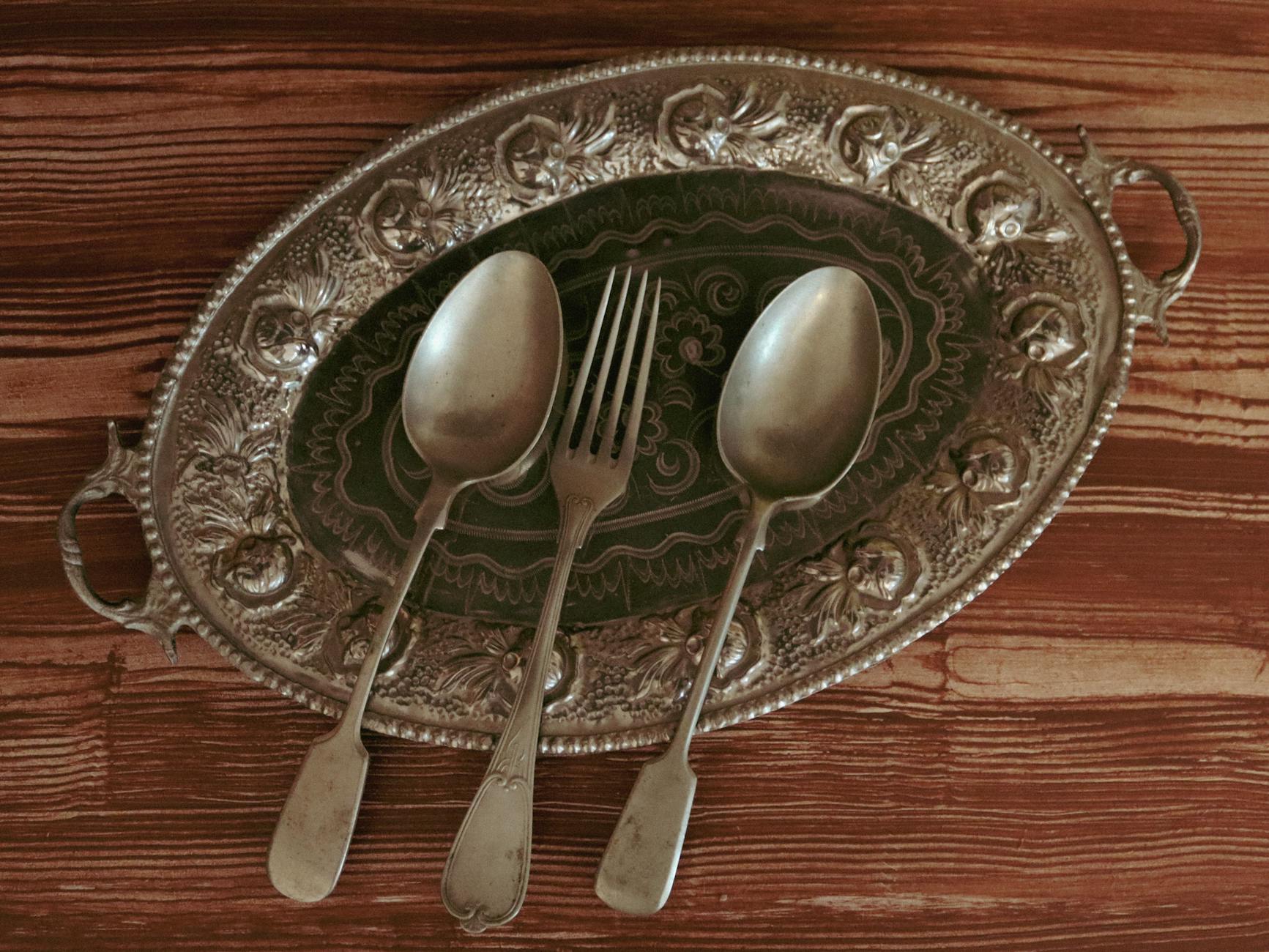
From Sinful Novelty to Sunday Staple: The Wild Journey of the Fork Across Centuries and Continents
Pick up a fork right now. Go ahead — there's probably one within arm's reach. It feels completely natural, doesn't it? Neutral, even. It's just a fork. But for most of recorded human history, that humble little utensil was anything but neutral. It was scandalous. It was ungodly. And in some corners of the world, it was considered a sign of dangerous vanity.
The fork has one of the most contentious origin stories of any object sitting on your kitchen table.
A Byzantine Invention Nobody Asked For
The fork's earliest known appearance as a dining utensil traces back to the Byzantine Empire, sometime around the 4th century AD. Byzantine royalty used small, two-pronged golden forks to handle fruit at the table — a practice that was less about practicality and more about signaling refinement. Getting sticky fingers was apparently beneath the imperial class.
The tool stayed largely confined to elite Byzantine households for centuries. When a Byzantine princess named Maria Argyropoulina brought a small case of golden forks to Venice in 1005 AD upon marrying the son of the Doge, she inadvertently set off one of history's more unexpected moral controversies. She used her forks at the dinner table in front of Venetian guests, and the reaction was not admiration.
Church officials were appalled. Saint Peter Damian, an Italian cardinal and prominent religious reformer, reportedly condemned her use of the fork as an act of excessive indulgence — a sign of moral corruption. When she died young from an illness shortly after arriving in Venice, some clergymen pointed to her fork habit as evidence of God's disapproval. It sounds almost comedic today, but in 11th-century Europe, this was a genuine theological talking point.
Europe Takes Its Sweet Time
Despite Venice's early exposure, forks didn't catch on quickly — not even close. For the next several hundred years, Europeans continued eating with their hands, knives, and spoons, viewing the fork as an unnecessary affectation at best and a spiritually suspect object at worst.
Italy was the first region to genuinely warm to the fork, largely through the influence of wealthy merchant families during the Renaissance. By the 1500s, Italian nobles were using forks with some regularity, and the utensil began its slow crawl northward through France and eventually England.
But resistance was stubborn. When the fork arrived in England in the early 1600s — brought back by a traveler named Thomas Coryat who'd encountered it in Italy and wrote enthusiastically about its merits — he was openly ridiculed. Critics called it effeminate and pointless. English men, the argument went, had perfectly good hands. Why complicate things?
France's relationship with the fork was similarly awkward. Even after Catherine de Medici helped introduce Italian dining customs to the French court in the 16th century, widespread fork adoption lagged. Louis XIV of France famously preferred eating with his hands well into the late 1600s, which — given that he was the most powerful and imitated monarch in Europe — did the fork's reputation no favors.
The Fork Crosses the Atlantic (Eventually)
By the time European settlers were establishing colonies in America, the fork was still far from a household standard even back in England. Early colonial Americans largely ate with knives, spoons, and their hands — a practical approach that suited frontier life just fine.
The fork began appearing in wealthier American households in the late 1600s and early 1700s, typically as a status symbol among the merchant and planter classes. But even then, most forks had only two tines and were used primarily to hold meat steady while cutting — not to actually lift food to the mouth the way we use them today.
The shift came gradually through the 18th century, accelerated by the growing influence of European dining etiquette among America's aspiring middle and upper classes. Four-tined forks became more common after 1800, and the expansion of silverware manufacturing in the United States — particularly in New England — made forks accessible and affordable for ordinary households rather than just the wealthy.
By the mid-1800s, the fork had become genuinely standard at the American table. Etiquette manuals of the era treated it as an assumed fixture of proper dining, and the uniquely American habit of the "fork switch" — cutting food with the knife in the right hand and fork in the left, then switching the fork to the right hand to eat — had already emerged as a distinctly New World custom, different from the European style of keeping the fork in the left hand throughout the meal.
Why the Fork's Story Still Matters
It's easy to smile at the idea of medieval clergymen condemning a piece of cutlery as spiritually dangerous. But the fork's long, bumpy road to the American dinner table is actually a pretty compelling window into how cultures resist change — even obviously useful change — when it challenges existing habits and social norms.
Every time you set a table tonight, you're placing an object that took roughly 1,500 years to earn its spot there. Not bad for something that started as a Byzantine princess's golden novelty item and spent centuries being called everything from sinful to silly.
Some things are worth waiting for.