The Dinner Fork Was Once Considered an Instrument of the Devil — So How Did It End Up in Every Kitchen Drawer?
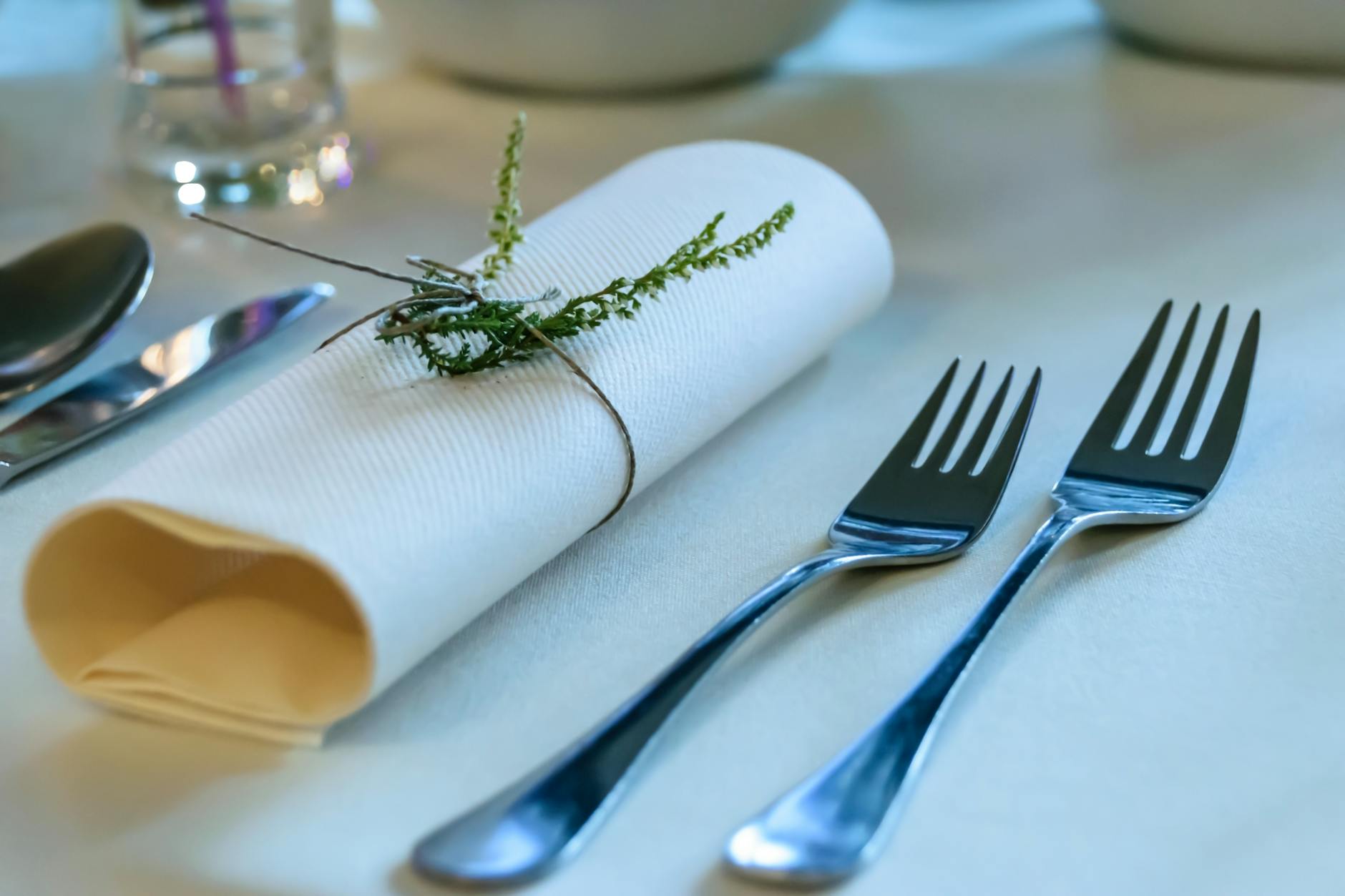
The Dinner Fork Was Once Considered an Instrument of the Devil — So How Did It End Up in Every Kitchen Drawer?
There's a fork in your kitchen right now. Probably several. They live in a drawer alongside spoons and knives, used without ceremony for everything from scrambled eggs to birthday cake. The fork is so ordinary that it barely registers as an object at all — it's just there, always has been, always will be.
Except it hasn't always been there. Not even close. The fork's path from rare novelty to kitchen-drawer fixture is a genuinely strange journey that spans more than a thousand years, crosses multiple continents, and passes through a period when the Catholic Church considered the thing morally offensive. If any object earns the right to a hidden backstory, it's this one.
It Started in the East
The fork, in one form or another, has ancient roots. Two-pronged utensils were used for cooking and serving food in various cultures long before anyone thought to bring one to the table. But the dining fork as a personal eating implement — the small, handled tool meant for an individual rather than a serving dish — first appeared in the Byzantine Empire, somewhere around the 7th or 8th century.
Byzantine nobility used small golden forks for eating fruit and other foods that might stain or perfume their fingers. These were luxury objects, made of precious metals and used by the powerful as a way of signaling refinement. The fork wasn't a practical tool so much as a statement: I am too important to touch my own food.
From Byzantium, the fork made its way to the Islamic world and then, slowly, into parts of the Mediterranean. But Western Europe was a different story entirely.
The Church Said No
In 1004, a Byzantine princess named Maria Argyropoulina married the son of a Venetian Doge and brought a small case of golden forks with her as part of her dowry. At a feast following the wedding, she used one to eat. The reaction was less than enthusiastic.
St. Peter Damian, a prominent Italian cardinal, was among those who took offense. In his view, food was a divine gift, meant to be received with the hands God gave you. Using a fork — an artificial instrument to avoid direct contact with what the earth had provided — was a sign of excessive vanity and a rejection of natural order. When Maria died young, some clergy interpreted her early death as divine punishment for her decadent table habits.
This wasn't an isolated reaction. For centuries, the fork sat on the wrong side of a cultural and religious divide. In much of Europe, eating with your hands was not only normal but considered entirely appropriate, even at royal tables. Bread was used to scoop food. Knives handled anything that needed cutting. The fork was a foreign affectation, associated with Byzantine excess and, later, with Italian aristocrats who were viewed with equal parts admiration and suspicion by the rest of Europe.
Italy Changes Its Mind — Slowly
By the 14th and 15th centuries, the fork had found a foothold in Italy, particularly among the upper classes of Venice, Florence, and the courts of the Italian city-states. Italian nobles began using forks for pasta and other foods that were difficult to manage elegantly with fingers alone. The Renaissance, with its emphasis on refinement and the cultivation of personal grace, gave the fork a more welcoming environment.
But even in Italy, the fork was a marker of status rather than a common utensil. Owning a personal fork said something about who you were. Ordinary people didn't have them, didn't use them, and largely didn't want them.
The fork's spread through the rest of Europe was slow and often met with resistance. When Catherine de Medici is said to have brought forks to France in the 16th century upon her marriage to the future King Henry II, French courtiers reportedly found the whole thing ridiculous — not just pretentious, but genuinely impractical. The early two-pronged forks were awkward to use, and food had a habit of falling off them at inconvenient moments. Critics were not entirely wrong.
England Resists Longest
If France was reluctant, England was downright hostile. The fork arrived in England in the early 1600s, introduced by a traveler named Thomas Coryat who had observed fork use in Italy and written about it with enthusiasm. His countrymen were not impressed. He was mocked in pamphlets, ridiculed in public, and his advocacy for the fork became something of a running joke.
The English view, bluntly stated, was that forks were for people who didn't know how to eat properly. Fingers had worked for centuries. Why introduce a fiddly piece of metal? It took the better part of another century before fork use became genuinely common in England, and even then it was driven more by changing fashions than any practical revelation.
The Fork Crosses the Atlantic
By the time European settlers arrived in North America, the fork was becoming more established in upper-class households back home, but it was far from universal. Early colonial America was, in many ways, a practical place with little patience for European affectations. People ate with knives, spoons, and their hands. A fork, if anyone owned one, was a possession of some significance.
Through the 18th century, as American prosperity grew and the new nation began developing its own ideas about refinement and respectability, the fork gradually became more common. The Victorian era — with its elaborate etiquette culture and its obsession with proper table manners — finished the job. By the mid-1800s, fork use in America had moved from optional to expected among the aspiring middle class.
Etiquette manuals proliferated, carefully explaining not just that you should use a fork, but exactly how — which hand, which course, which size. The fork became a symbol of civilization in the Victorian imagination, which would have astonished the medieval clergy who had condemned it as the opposite.
An Ordinary Object With an Extraordinary Past
The fork in your kitchen drawer is, in a quiet way, the end point of a very long argument about refinement, religion, practicality, and what it means to eat like a civilized person. It was condemned and mocked and ignored for centuries before it finally became so commonplace that we stopped noticing it at all.
That's often how it goes with the things we use every day. The more ordinary something seems, the stranger the road that brought it to us. The fork is proof that even the most unremarkable objects carry history in them — if you know where to look.