The Deadly Summer of 1842
Dr. John Gorrie watched another patient die in the suffocating heat of a Florida hospital ward, and he'd had enough. The summer of 1842 was particularly brutal in Apalachicola, where Gorrie served as the chief physician at the marine hospital. Yellow fever patients were dying not just from disease, but from the oppressive heat that turned hospital rooms into furnaces.
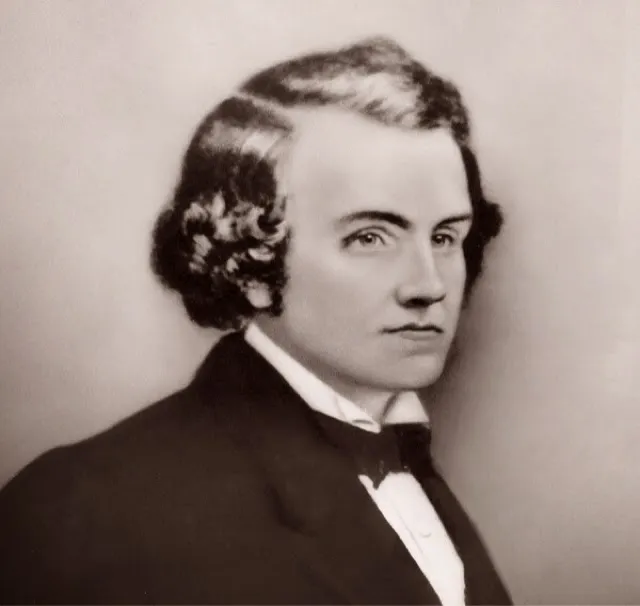 Photo: Dr. John Gorrie, via lh6.googleusercontent.com
Medical wisdom of the time held that cool air could reduce fever and save lives, but Florida summers offered no natural relief. Gorrie needed a way to manufacture cold air in a place where ice was a luxury shipped from distant northern lakes.
His solution would accidentally create the technology that now hums quietly in every American kitchen, though food preservation was the furthest thing from his mind.
The Ice Machine That Nobody Wanted
Gorrie's first artificial ice machine was a contraption of pipes, pistons, and compressed air that looked more like industrial equipment than medical device. The principle was revolutionary: compress air to heat it, cool the compressed air with water, then allow it to expand rapidly, creating a dramatic temperature drop.
By 1851, he had received the first U.S. patent for mechanical ice-making. His machine could produce ice in the Florida heat, providing the cool air he believed would save his fever patients.
But nobody cared.
Northern ice companies had cornered the market with natural ice harvested from frozen lakes and shipped south in insulated railroad cars. Gorrie's artificial ice was more expensive and less reliable than the natural product. Investors weren't interested in a machine that solved a problem most people didn't know they had.
Gorrie died in 1855, bankrupt and forgotten, never knowing that his fever-fighting invention would eventually reshape American domestic life.
From Hospital Wards to Meat Packers
The real breakthrough came not from medicine but from capitalism. In the 1870s, Chicago meatpacking plants began experimenting with mechanical refrigeration to preserve beef during long-distance shipping. Gustavus Swift and other meat barons realized that artificial cooling could extend their market reach from local neighborhoods to national distribution.
Refrigerated railroad cars—"reefers"—revolutionized the American food supply. Suddenly, fresh meat could travel from Chicago stockyards to New York dinner tables without spoiling. The technology Gorrie developed to save fever patients was now feeding the nation.
Breweries followed, using mechanical cooling to produce consistent beer year-round. Dairy operations embraced refrigeration to extend milk's shelf life. Ice cream parlors could operate in summer heat. Each industry discovered new applications for artificial cold, but residential use remained a distant afterthought.
The Kitchen Revolution Nobody Saw Coming
The first home refrigerators appeared in the 1910s, but they were enormous, expensive monsters that only wealthy families could afford. Early models cost as much as automobiles and required dedicated electrical circuits that most homes lacked.
General Electric changed everything in 1927 with the "Monitor Top" refrigerator—a sealed unit that was smaller, more reliable, and actually affordable for middle-class families. For the first time, artificial refrigeration became accessible to ordinary Americans.
The transformation was immediate and profound. Families who had shopped daily for perishable foods could now buy groceries weekly. Leftovers, previously a risky proposition, became safe and practical. Ice cream could be stored at home. Milk stayed fresh for days instead of hours.
American kitchens were accidentally being redesigned around Dr. Gorrie's fever-fighting technology.
The Death of the Icebox Industry
For over a century, American homes had relied on iceboxes—insulated cabinets cooled by blocks of ice delivered by "ice men" who made daily rounds through neighborhoods. This was a massive industry employing hundreds of thousands of workers who harvested, transported, and delivered natural ice.
Mechanical refrigeration killed it almost overnight.
By the 1950s, the ice delivery truck had vanished from American streets. Ice houses closed. The romantic figure of the iceman—immortalized in plays and songs—became a historical curiosity. An entire profession disappeared because a Florida doctor had wanted to cool hospital wards.
The speed of this transition shocked even industry observers. One generation grew up waiting for the ice man; the next couldn't imagine life without electric refrigeration.
How Cold Storage Rewrote American Culture
Refrigeration didn't just change what Americans ate—it transformed how they lived. Suburban development became practical because families could store fresh food far from daily markets. Women's daily routines shifted from constant food shopping to weekly grocery runs. The concept of "meal planning" emerged as families could buy ingredients days before cooking them.
Restaurant culture evolved as establishments could maintain consistent ingredient quality year-round. Regional food specialties could be enjoyed nationally. The idea of "fresh" was redefined from "recently harvested" to "properly refrigerated."
Even social customs changed. The refrigerator became a family communication center, covered with notes, photos, and children's artwork. "Raiding the fridge" entered American vocabulary as a midnight ritual. The humming of the compressor became the soundtrack of domestic life.
The Unintended Consequences of Artificial Cold
Dr. Gorrie's medical innovation accidentally created modern American food culture, but it also generated consequences he never anticipated. Refrigerated transportation enabled industrial agriculture, concentrating food production in distant locations. Local food traditions weakened as national brands dominated grocery stores.
The environmental impact was enormous. Refrigeration consumes massive amounts of electricity, making it one of the largest residential energy uses. Early refrigerants damaged the ozone layer. The cold chain required to maintain food freshness from farm to table became a significant contributor to climate change.
Yet Americans embraced these trade-offs because refrigeration delivered undeniable benefits: safer food, greater convenience, and expanded choices that previous generations couldn't imagine.
The Doctor's Lasting Legacy
Walk into any American kitchen today, and Dr. John Gorrie's influence is unmistakable. That humming white box preserving your leftovers descends directly from his 1840s fever-fighting experiments. The weekly grocery shopping trip, the meal planning, the ice cream in the freezer—all consequences of a medical device that was never intended for food preservation.
Gorrie died thinking he had failed. His ice machine couldn't compete with natural ice, his medical theories weren't widely accepted, and his investors had abandoned him. He couldn't have imagined that his fever-reducing invention would become so essential to American life that power outages are measured by how long refrigerators can maintain safe temperatures.
Every time you open your refrigerator door and feel that rush of cool air, you're experiencing the legacy of a frustrated doctor who just wanted to save fever patients in a sweltering Florida hospital. Sometimes the most transformative inventions begin with the simplest human desire to solve an immediate problem, only to accidentally solve problems that nobody knew existed.