The Night Everything Tasted Too Sweet
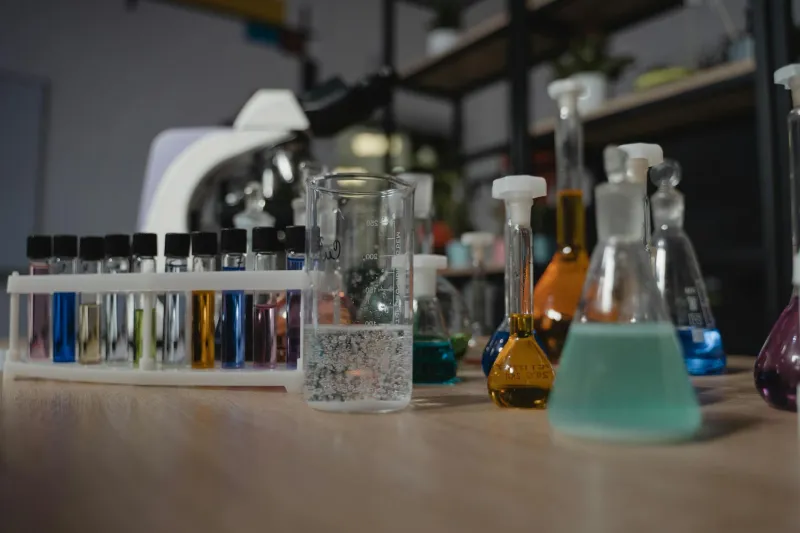
Constantin Fahlberg was exhausted. The Johns Hopkins chemist had spent another long day in 1879 hunched over beakers filled with coal tar derivatives, trying to find new uses for the black, sticky byproduct of gas production. Coal tar was everywhere in industrial America, and chemists like Fahlberg were racing to transform this waste into something valuable.
That evening, he rushed home to Baltimore without his usual ritual of scrubbing his hands clean. When he sat down for dinner with his wife, something strange happened. His bread roll tasted impossibly sweet — sweeter than anything he'd ever experienced. His wife's bread tasted normal. The butter was fine. But everything Fahlberg touched with his fingers carried this intense, almost artificial sweetness.
Most people would have washed their hands and forgotten about it. Fahlberg ran back to his laboratory.
From Coal Waste to Kitchen Counter
Back in his lab, Fahlberg began the detective work that would reshape American eating habits forever. He systematically tasted every beaker, every surface, every chemical compound he'd been working with that day. (This was 1879 — laboratory safety was more suggestion than science.)
The culprit turned out to be a crystalline substance he'd accidentally created while experimenting with coal tar and various acids. He'd been trying to develop new dyes and preservatives, but instead stumbled onto something 300 times sweeter than regular sugar. He named it saccharin, after the Latin word for sugar.
What made this discovery revolutionary wasn't just its sweetness — it was what saccharin didn't do. Unlike sugar, it passed through the human body unchanged. No calories. No effect on blood sugar. For the first time in human history, someone had created sweetness without the substance.
The Sweet Taste of Controversy
Fahlberg quickly realized he was sitting on a goldmine. He filed patents, started a company, and began marketing saccharin as a miracle for diabetics and anyone wanting to avoid sugar's calories. By the 1890s, saccharin was showing up in American kitchens, marketed as a health product.
But the sugar industry wasn't amused. They launched campaigns claiming artificial sweeteners were dangerous, unnatural, and potentially toxic. The controversy reached all the way to President Theodore Roosevelt's dinner table.
In 1907, Roosevelt's own doctor recommended saccharin to help the president lose weight. When food safety officials tried to ban it, Roosevelt reportedly exploded: "Anyone who says saccharin is injurious to health is an idiot!" The ban was dropped, but the battle lines were drawn between artificial and natural sweeteners — a fight that continues today.
World Wars and Sweet Rationing
Saccharin's biggest break came during World War I and II, when sugar rationing made it a household necessity. American families who had never considered artificial sweeteners suddenly found themselves stirring white packets into their coffee and baking with mysterious powders.
The war years normalized artificial sweetening in ways peacetime marketing never could. When soldiers returned home, they brought acquired tastes for diet sodas and sugar-free desserts. What had started as a wartime substitute became a permanent fixture in American pantries.
The Pink Packet Revolution
By the 1950s, saccharin had evolved beyond its medicinal origins. Sweet'N Low's iconic pink packets appeared in diners and restaurants across America, making artificial sweetening as common as salt and pepper. The post-war diet culture embraced saccharin as the key to having your cake and eating it too — literally.
But saccharin's journey wasn't smooth. In the 1970s, studies linking it to cancer in laboratory rats led to warning labels and another near-ban. The American public rebelled. Congress received more letters about saccharin than about any issue except the Vietnam War. The artificial sweetener had become so embedded in American food culture that threatening it felt like threatening a way of life.
The Legacy of Unwashed Hands
Today, Fahlberg's accidental discovery has spawned a multi-billion-dollar industry. From aspartame to sucralose to stevia, artificial and alternative sweeteners dominate American grocery stores. Diet sodas, sugar-free gum, and low-calorie desserts trace their lineage directly back to that moment when a tired chemist forgot to wash his hands.
The irony is perfect: an accident involving the dirtiest industrial byproduct of the 19th century created the foundation for America's obsession with "clean" eating and calorie control. Coal tar — the black sludge of industrial progress — accidentally birthed the white crystals that would help define modern American diet culture.
Fahlberg's discovery proved that sometimes the most revolutionary changes come not from grand intentions, but from the smallest oversights. One skipped hand-washing created an entirely new relationship between Americans and sweetness — proving that in the kitchen, as in the laboratory, accidents can be the most powerful ingredient of all.
Every time you tear open a pink, blue, or yellow packet at a coffee shop, you're participating in a tradition that started with dirty hands and a curious chemist who couldn't resist tasting the unknown.