The Brazilian Monk's Garden Surprise That Built California's Citrus Kingdom
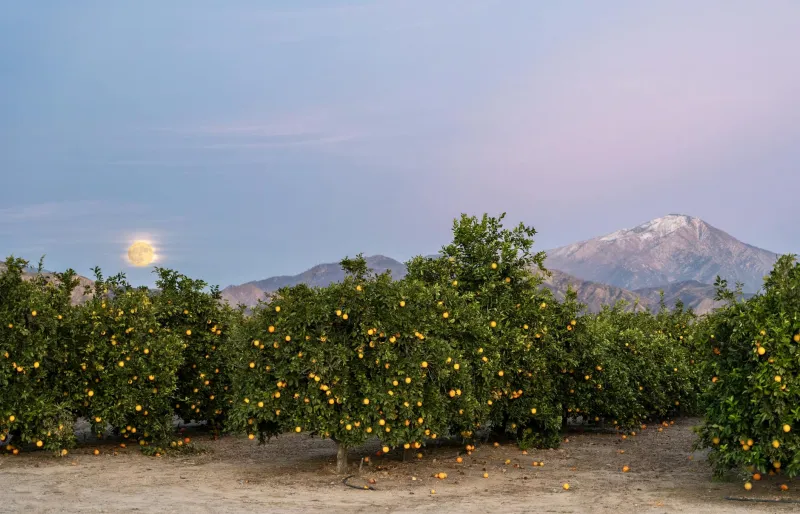
The Brazilian Monk's Garden Surprise That Built California's Citrus Kingdom
Every time you peel a navel orange for breakfast, you're tasting the offspring of a single freak tree that grew in a Brazilian monastery garden nearly 200 years ago. That one mutant orange — with its distinctive "belly button" and seedless flesh — would eventually launch California's entire citrus empire, thanks to a retired woman in Riverside who decided to plant two mysterious cuttings in her backyard.
The Monk Who Found Nature's Accident
Sometime in the 1820s, a Franciscan monk at the Monastery of Bahia in Brazil was tending his garden when he noticed something peculiar about one of his orange trees. Instead of the usual seedy fruit, this tree produced oranges with no seeds at all — and stranger still, each orange had a second, smaller fruit nestled inside its base, creating what looked like a human navel.
This wasn't just unusual; it was botanically impossible under normal circumstances. The tree was what scientists call a "sport" — a genetic mutation that occurred naturally. Without seeds, the tree couldn't reproduce the traditional way. The only method of propagation was through grafting, essentially cloning the original mutant.
The monk carefully tended this oddity, grafting cuttings to create more trees. Word of the seedless, sweet oranges eventually spread beyond the monastery walls. By the 1860s, these "Bahia" oranges had gained a reputation among Brazil's wealthy plantation owners as the finest citrus in the country.
An American Agent's Mission
In 1870, William Saunders, a botanist working for the newly formed United States Department of Agriculture, was scouring the world for crops that might thrive in America's diverse climates. When he heard whispers about Brazil's extraordinary seedless oranges, he knew he had to investigate.
Saunders arranged for twelve small cuttings to be carefully packed and shipped from Brazil to Washington, D.C. The journey was treacherous — most citrus cuttings died during long ocean voyages. When the package finally arrived, only two cuttings had survived the trip, barely clinging to life.
Faced with these precious survivors, Saunders made a decision that would reshape American agriculture. Rather than keep them in government greenhouses, he decided to send them to California, where the Mediterranean climate might give them the best chance of survival.
The Riverside Gamble
Saunders chose an unlikely recipient for his botanical treasure: Eliza Tibbets, a retired woman living in Riverside, California. Tibbets wasn't a professional farmer or horticulturist — she was simply someone who loved gardening and had written to the USDA expressing interest in experimental plants.
When the package arrived at her modest home in 1873, Tibbets found two scraggly cuttings that looked more dead than alive. Most people would have composted them. Instead, Tibbets carefully planted them in her backyard, using precious water from her household supply to keep them alive during California's dry season.
Her neighbors thought she was wasting her time on what looked like dying sticks. But Tibbets had patience, and more importantly, she had faith in the USDA's judgment.
From Backyard Experiment to Agricultural Revolution
Both cuttings survived and began to flourish in Riverside's climate. As they matured into trees, they produced the same miraculous fruit that had amazed Brazilian monks decades earlier — sweet, seedless oranges with that distinctive navel formation.
Word spread quickly through California's agricultural community. Local farmers began requesting cuttings from Tibbets' trees, and she obliged, essentially giving away what would become the foundation of a multi-billion dollar industry.
The timing couldn't have been better. The transcontinental railroad had just been completed, making it possible to ship fresh California produce to markets across the country. Americans in cold climates, who had never tasted fresh citrus during winter months, suddenly had access to sweet, easy-to-peel oranges that arrived perfectly fresh.
The Navel Takes Over America
By the 1880s, California's navel orange groves were expanding rapidly. The fruit's natural advantages — no seeds to spit out, easy-to-peel skin, consistent sweetness, and that convenient natural portion indicator — made it perfect for American breakfast tables.
The navel orange's success transformed entire regions of California. Towns like Riverside, Orange, and Redlands became wealthy citrus centers. The industry employed thousands of workers and generated millions in revenue. Orange crate art became a uniquely American folk art form, with hundreds of colorful labels promoting California's "liquid sunshine."
The Legacy of One Woman's Garden
Today, virtually every navel orange consumed in America can trace its lineage back to those two cuttings that Eliza Tibbets nursed to life in her Riverside backyard. The original trees survived until the 1920s, becoming local landmarks that tourists would visit to see the "mother trees" of California's citrus industry.
Tibbets lived long enough to see her backyard experiment transform into an agricultural empire worth hundreds of millions of dollars. She died in 1898, probably never fully comprehending that her simple act of faith in planting two dying cuttings had fundamentally changed how America ate breakfast.
The next time you grab a navel orange from your grocery store, remember that you're holding the descendant of a Brazilian monk's garden curiosity, rescued by a government botanist's gamble, and brought to life by a retired woman who simply believed in giving dying plants a second chance. Sometimes the most extraordinary transformations begin with the most ordinary acts of hope.