Before Heinz Put It on the Burger, Doctors Were Writing Prescriptions for Ketchup
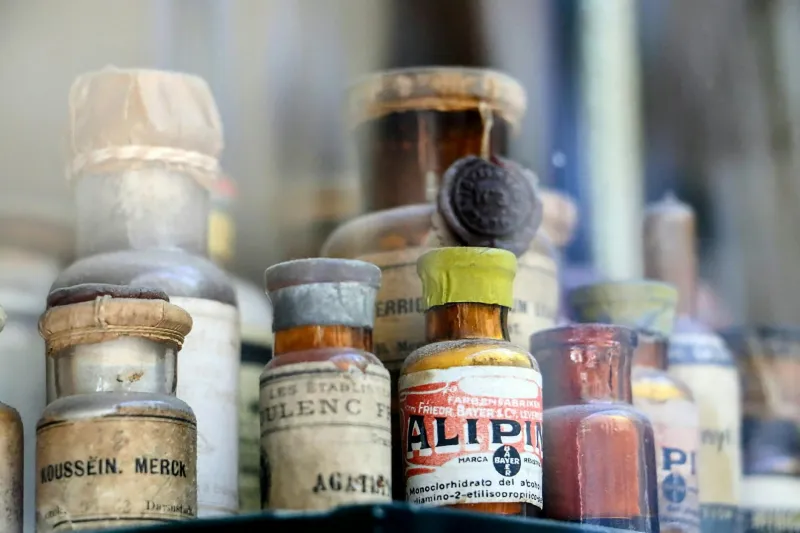
Before Heinz Put It on the Burger, Doctors Were Writing Prescriptions for Ketchup
There's a bottle of ketchup in roughly 97 percent of American refrigerators. It sits there quietly, behind the leftovers, completely unremarkable. But that red bottle has one of the most improbable backstories in culinary history — a journey that winds through ancient fishing villages in Southeast Asia, the drawing rooms of Georgian England, and eventually the back shelves of 19th-century American pharmacies, where it was sold not as a condiment, but as a cure.
It Started With Fish, Not Tomatoes
The word "ketchup" most likely comes from the Hokkien Chinese word kê-tsiap, a fermented sauce made from fish brine and spices that was traded widely across Southeast Asia. It wasn't red. It wasn't sweet. It bore almost no resemblance to what we squeeze onto fries today. But it was deeply savory, intensely flavored, and — crucially — it traveled well.
British and Dutch sailors encountered versions of this sauce along trade routes in the late 1600s and early 1700s and brought samples back to Europe. The English, characteristically, loved the idea but swapped out the ingredients they couldn't easily source. Anchovies, mushrooms, walnuts, and oysters all took turns standing in for the original fermented fish base. By the early 1700s, British cookbooks were full of "ketchup" recipes that had almost nothing in common with the original except the name and the general principle of being a concentrated, shelf-stable condiment.
Tomatoes didn't enter the picture until the late 1700s, and even then, the transition was slow. Tomatoes were widely considered poisonous in the American colonies — a suspicion that lingered well into the early 19th century. Putting them in a sauce people were supposed to eat voluntarily took some convincing.
The Doctor Will See You Now — Bring Your Ketchup
Here's where the story takes a turn most people don't see coming.
In the 1830s, an Ohio physician named John Cook Bennett began promoting tomatoes as a serious medical treatment. He published articles claiming that tomatoes could treat conditions ranging from diarrhea and indigestion to liver disease and rheumatism. His writing spread quickly, and before long, tomato-based preparations were appearing in medical literature as legitimate remedies.
Enter tomato ketchup — not as a table sauce, but as a pill. Pharmacists and patent medicine manufacturers began producing concentrated tomato extract in pill and syrup form, marketed directly to patients. Advertisements from the 1830s and 1840s promoted "tomato ketchup" as a genuine therapeutic product. Some formulations were sold in pharmacies alongside other botanical remedies, positioned as a digestive aid and liver tonic.
This wasn't fringe quackery, either — at least not entirely. Tomatoes do contain compounds with mild anti-inflammatory properties, and the fermented or cooked preparations used at the time may have offered some genuine digestive benefit. But the medical enthusiasm for ketchup was also perfectly timed with a broader 19th-century appetite for patent medicines and botanical cures, and manufacturers were happy to lean into it.
For a few decades, ketchup occupied a genuinely ambiguous space — part condiment, part medicine, sold in both general stores and apothecaries.
How Heinz Changed Everything
The pivot toward ketchup-as-condiment was gradual, and Henry Heinz played a larger role in it than almost anyone else.
When Heinz introduced his tomato ketchup in 1876, the condiment market was already crowded, but the product itself was inconsistent. Homemade and commercially produced ketchups of the era varied wildly — some were thin, some were cloudy, and many relied on preservatives like sodium benzoate that were increasingly being scrutinized for safety concerns. Heinz made a deliberate choice to use higher tomato concentrations and natural preservation through vinegar and sugar, then market that decision heavily.
The move worked. Heinz ketchup became synonymous with reliability and cleanliness at a time when food safety was a genuine public concern. The company leaned into the condiment positioning — this was a table sauce, a flavor enhancer, something that belonged beside your food rather than in a prescription bottle.
By the early 20th century, the medical framing had largely faded. Ketchup's pharmaceutical chapter was quietly closed, and a new identity — the all-American condiment — took its place.
Why the Story Matters
What's remarkable about ketchup's journey isn't just the strangeness of the detour through medicine. It's how completely that chapter was erased from the product's identity. Today, ketchup is so thoroughly associated with burgers, hot dogs, and diner tables that the idea of a doctor prescribing it feels almost absurd.
But the reinvention wasn't accidental. It was the result of changing public attitudes toward food safety, the rise of branded consumer products, and one company's very deliberate decision to reframe what ketchup was for.
The sauce in your refrigerator right now has been a fish paste, a mushroom brine, a medical remedy, and a burger companion. It crossed oceans, changed ingredients multiple times, and spent several decades in a pharmacy before landing on your table.
Not bad for something most of us barely notice we're reaching for.